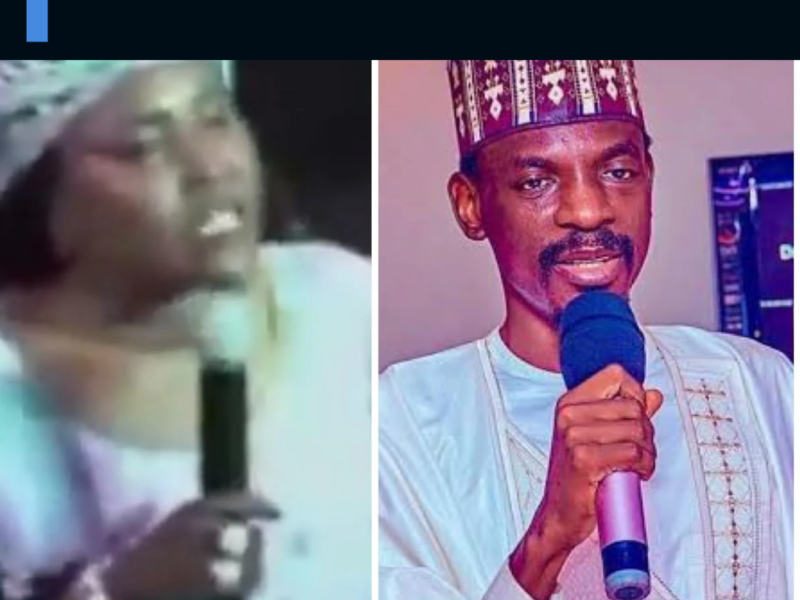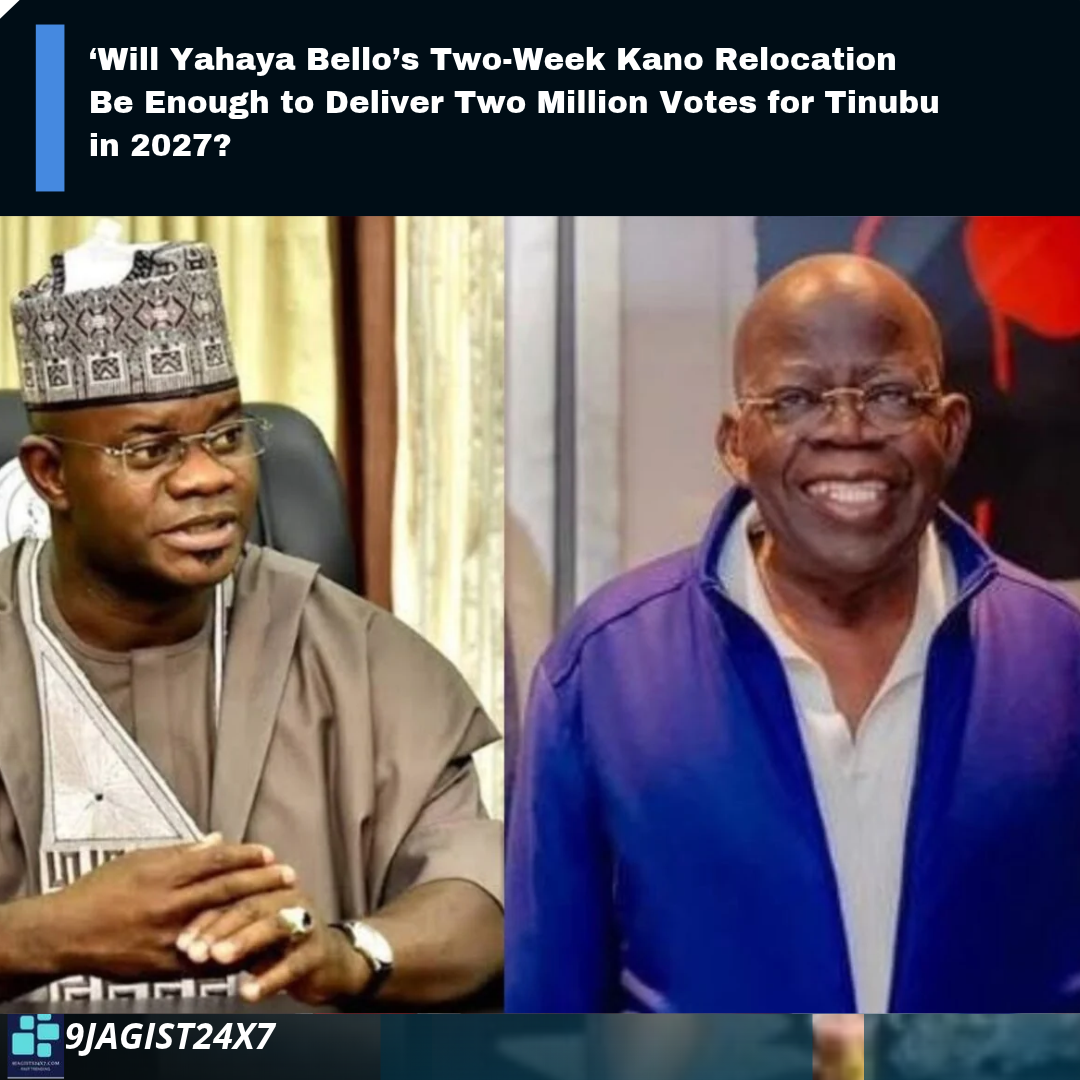
Former Kogi State Governor Yahaya Bello has pledged to relocate to Kano for two weeks to personally campaign for President Bola Tinubu ahead of Nigeria’s 2027 general elections. His declaration, made at a political mobilisation event in Kano, signals an early and unusually personal push by a prominent APC figure to expand the president’s support base in a state that will be crucial to any realistic path to re-election.
Advertisements
Bello’s promise goes beyond the usual appeal for votes. He said he is prepared to physically base himself in Kano for a fortnight, working directly with local political structures, community leaders, and supporters to mobilise support for Tinubu and Kano Governor Abba Kabir Yusuf. The pledge was made at the Yoruba Political Mobilisation and Empowerment Programme organised by the Leke Abejide Foundation, an event that brought together Yoruba residents and other non-indigenous communities in the state.
Advertisements
The former governor’s message was blunt: Kano’s previous support for Tinubu was not good enough. He noted that the president received close to 500,000 votes in Kano during the 2023 presidential election, but argued that this figure fell short of what the state’s political weight and voting population should deliver.
“Your voting population in Kano delivered nearly 500,000 votes for President Bola Ahmed Tinubu in the last presidential election,” Bello said, according to TheCable. “That performance was not satisfactory, and we must do better this time.”
That framing reveals the scale of the APC’s ambition in Kano. Bello and House of Representatives member Leke Abejide asked residents to deliver two million votes for Tinubu in 2027—a target that would represent a dramatic increase from the roughly 500,000 votes Tinubu reportedly received there in 2023.
The two-million-vote appeal is not merely a rhetorical flourish. Kano is one of Nigeria’s most populous states and has historically been a decisive battleground in presidential contests. A major swing in the state could substantially alter the national arithmetic, particularly in an election where turnout, coalition politics, and regional alliances are likely to matter as much as party loyalty.
Why Bello Is Campaigning in Kano
Bello’s decision to focus on Kano reflects several overlapping political calculations.
First, he is seeking to strengthen Tinubu’s position in northern Nigeria. Although Tinubu won the 2023 presidential election, his performance in some northern states remains a central question for the APC as the next election approaches. By publicly committing to an on-the-ground campaign in Kano, Bello is positioning himself as a key mobiliser for the president’s re-election effort.
Second, the move ties Tinubu’s fortunes to Governor Abba Kabir Yusuf. Bello said he intends to campaign for both the president and the Kano governor, suggesting that the APC sees the state’s political contest as interconnected rather than separate. That is significant because Kano’s political landscape has often been shaped by intense competition between rival political machines, influential traditional institutions, and deeply rooted local networks.
Third, Bello’s appearance at a Yoruba mobilisation event highlights the importance of non-indigenous communities in Kano politics. He urged Yoruba residents and other non-indigenous groups to consolidate behind the All Progressives Congress and its candidates. In a diverse commercial hub such as Kano, these communities can be politically consequential, especially when mobilised through cultural associations, business networks, religious institutions, and local leaders.
A two-week relocation is a more hands-on approach than simply sending campaign representatives or issuing statements from Abuja. If carried out as promised, Bello would be expected to attend meetings, engage community stakeholders, coordinate party structures, and appear at mobilisation events across the state.
The strategy appears designed to create visibility and urgency. By saying he will “relocate,” Bello is signalling that Kano is not a secondary campaign stop but a priority battlefield. He also expressed confidence that Abejide’s political network could help mobilise at least two million votes for Tinubu.
However, the pledge also raises practical questions. Two weeks is a short period in electoral politics, particularly in a state as large and politically complex as Kano. Sustained voter mobilisation usually requires months of organisation: voter registration drives, ward-level coordination, candidate messaging, dispute resolution, logistics, and repeated engagement with communities. A high-profile visit can energise supporters, but it cannot by itself manufacture two million votes.
The reported gap between Tinubu’s nearly 500,000 votes in Kano in 2023 and the two-million-vote target is enormous. To reach that goal, the APC would need to more than quadruple the president’s previous performance in the state.
That does not make the target impossible, but it makes it highly ambitious. It would require a broad coalition of voters, including those who may not currently identify with the APC, as well as strong turnout among existing supporters. It would also require the party to overcome any local dissatisfaction with national economic conditions, governance, security, or the performance of state-level political actors.
Bello’s appeal that Northerners should back Tinubu’s re-election—and his argument that the president should be allowed to complete two constitutionally permitted terms—adds a regional and incumbency dimension to the campaign. That argument may resonate with APC-aligned voters, but it will need to compete with other political narratives in a state where party allegiance has often shifted sharply between election cycles.
Leke Abejide, the federal lawmaker behind the mobilisation programme, is central to the Kano push. The event was organised through the Leke Abejide Foundation, and Bello specifically linked the two-million-vote target to Abejide’s political network.
Abejide and Bello jointly asked Kano residents to deliver the votes for Tinubu, making the event both a cultural mobilisation exercise and an early campaign declaration. Their partnership suggests that the APC may be attempting to combine northern political access with Yoruba community mobilisation in Kano—a potentially useful coalition if it can be converted into organised electoral support.
Bello’s announcement is an early sign that the 2027 campaign is already taking shape, even though the election remains months away. Political figures are beginning to stake out territories, court communities, and test messages that could define the contest.
For Tinubu, the Kano effort represents an attempt to deepen support in a northern stronghold where the APC cannot afford complacency. For Bello, it offers a chance to demonstrate national political relevance and organisational capability beyond Kogi. For Abejide, it reinforces his role as a bridge between Kano’s Yoruba and non-indigenous communities and the broader APC political establishment.
The central question is whether the promise of a two-week presence can become a durable campaign operation. Bello has set a high public benchmark: not just support for Tinubu, but a massive, measurable increase in votes from Kano. If the APC can build the local structures needed to pursue that target, his pledge could become an important part of the president’s re-election strategy. If not, it may be remembered as an ambitious early promise in a long and unpredictable campaign.
Advertisements