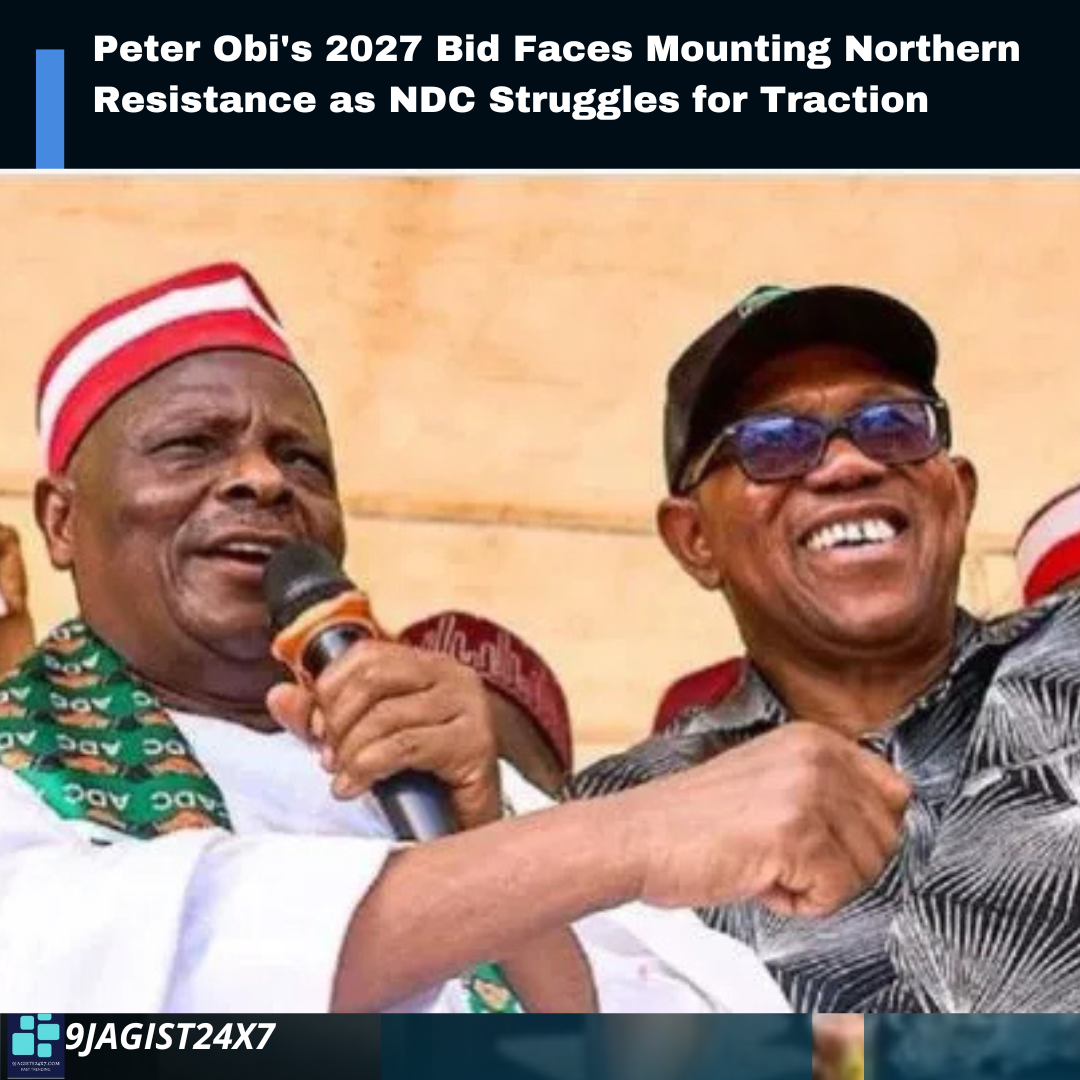
The presidential ambitions of former Anambra State governor Peter Obi are running into serious headwinds in Northern Nigeria, where political stakeholders, youth groups, and ordinary voters appear largely unreceptive to his newly formed Nigeria Democratic Congress (NDC) and its alliance with former Kano governor Rabiu Kwankwaso.
Advertisements
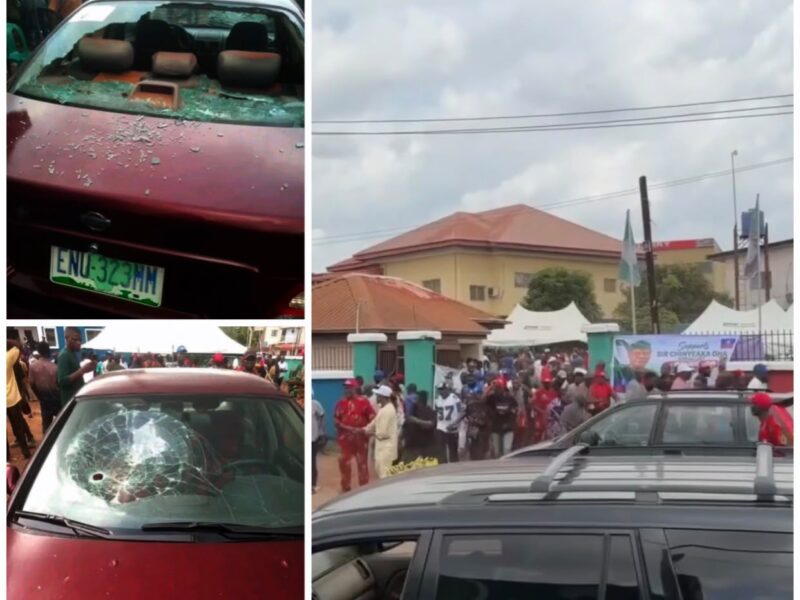
Investigations reveal that the partnership, far from consolidating northern support, has instead triggered a backlash — with some regional leaders actively warning their followers against the ticket. In certain circles, campaign materials circulating on WhatsApp platforms have gone as far as labelling the Obi-Kwankwaso alliance as “haram.” The resistance has spilled into the streets: in Ungogo Local Government Area of Kano State, angry youths were recently reported to have burned campaign posters bearing the duo’s images.
Advertisements
Political defections tell a similar story. Muhammad Tomas, a member of the Kano State House of Assembly who had crossed to the NDC from the APC, has since returned to the ruling party — an early signal of the difficulties the new platform faces in consolidating even its initial gains in the region.
A Party Few Have Heard Of
Professor Tukur Muhammad-Baba, National Publicity Secretary of the Arewa Consultative Forum, described the NDC as “largely unknown” to the average voter in the North, and questioned whether Kwankwaso still commands the formidable support base he demonstrated during the 2023 elections — even in his Kano stronghold.
Muhammad-Baba, however, situated the NDC’s challenges within a broader political crisis of confidence. “The average northern voter is tired of all the political parties without exception,” he said. “People are no longer impressed by slogans and promises. They want practical solutions to their problems.”
A political science professor in Sokoto, who spoke anonymously, reinforced those concerns, noting that unlike the APC, PDP, and ADC, the NDC has no visible presence in states such as Kaduna, Jigawa, Katsina, Gombe, Niger, Taraba, Zamfara, Benue, and Plateau.
Distrust of Obi at the Core
For Zaid Ayuba, President of the Arewa Youth Consultative Council, the NDC’s northern problem is less about party structures and more about the man at the top of the ticket. Ayuba said northerners fundamentally do not trust Peter Obi, and argued that Kwankwaso lacks the credibility to change that perception.
He pointed to what he described as Obi’s “open support” for the Indigenous People of Biafra (IPOB) as a central grievance, alleging that Obi had in several interviews sought to undermine the Supreme Court judgment proscribing IPOB as a terrorist organisation. “The 2023 election was like a religious war, and northerners are beginning to fear that Obi has an agenda against the northern population,” Ayuba said.
The Northern Youth Assembly was even more direct in its criticism of Kwankwaso, accusing him of abandoning the region’s political interests by hitching his wagon to Obi. In a statement by Secretary General Hafiz Garba, the group said the alliance had reduced the Kwankwasiyya movement — long a symbol of northern political identity — to a “transactional instrument,” and declared that Kwankwaso now stood as a “political embarrassment” to the North.
With the 2027 election cycle gathering pace, the NDC faces the steep task of building a credible northern constituency from near scratch, at a time when its leading figures are viewed with deep suspicion by the very voters whose support a successful presidential run would require.
Advertisements