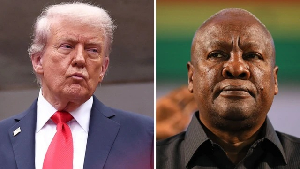
The United States has asked Ghana to renegotiate a $109 million (about GH₵1.27 billion) health agreement that Cabinet rejected over concerns about national sovereignty and data security, President John Mahama has revealed.
Advertisements
Mahama disclosed the development at a public forum in Goaso, in the Ahafo Region. He said Washington wants further discussions to review the contested provisions of the five-year aid package.
Advertisements
What the compact offered
The arrangement would have channelled $109 million into Ghana’s healthcare sector over five years. It was designed to replace certain funding streams previously managed through the United States Agency for International Development (USAID).
“The health compact the Americans brought to us, I have talked about it when I was in New York, so everyone knows about it,” Mahama said. “Later, they came back and said they wanted us to sit down and discuss the clauses we object to in the compact, with a view to either amending or removing them. We will sit down with them and discuss.”
Why Cabinet said no
Cabinet’s rejection followed a review by the Ministry of Health, which identified several conditions that conflicted with national interests.
The most serious objections concerned provisions requiring Ghana to hand over sensitive biological and medical data, including local pathogen profiles and individual healthcare records. Speaking at the Council on Foreign Relations in New York, Mahama questioned the demand: “It states that we shall give the United States our pathogen profile. I’m sure there are medical experts who understand that better than me. And it also says we should give our medical records. I mean, who takes another country’s medical records?”
Other sticking points included a requirement that Accra provide domestic counterpart funding, and a clause that would have curbed the Food and Drugs Authority’s power to inspect pharmaceutical imports entering the country under the programme. Mahama did not mince words about the overall package. “I mean, it was humiliating,” he said.
A wider push for health sovereignty
Ghana’s stance reflects a growing push across Africa for health sovereignty, regulatory independence and data protection. Many countries are seeking to reduce reliance on external bilateral funding by backing local drug manufacturing, home-grown research and partnerships on more equal terms.
The coming talks will test whether both sides can agree terms that respect Ghana’s sovereignty while keeping the development support in place.
Advertisements