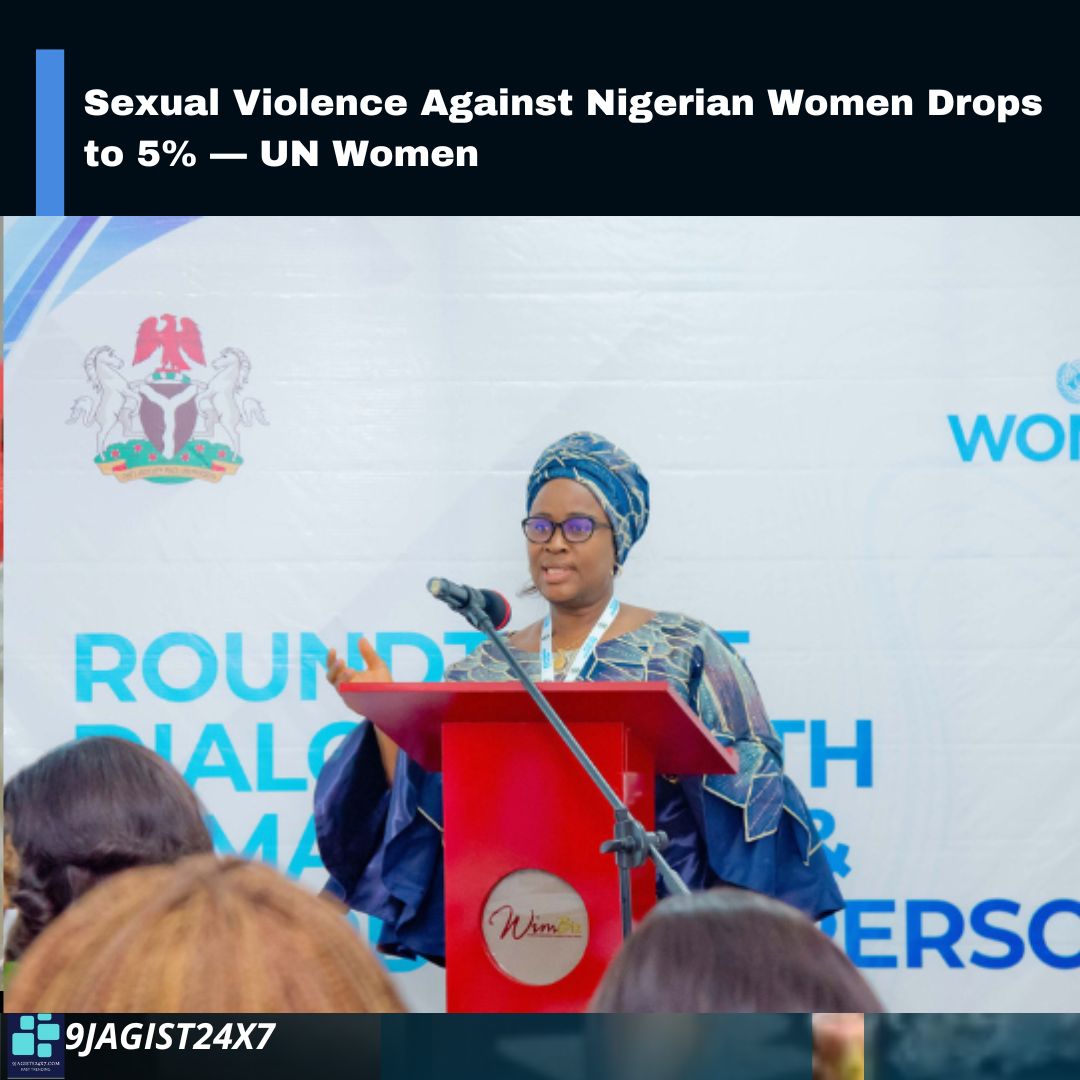
The United Nations Entity for Gender Equality and the Empowerment of Women (UN Women) has reported a significant decline in s3xual v!olence against women in Nigeria, falling from 9 per cent in 2018 to 5 per cent in 2024.
Advertisements
UN Women’s Representative to Nigeria and ECOWAS, Beatrice Eyong, disclosed this on Monday in Abuja at the closing ceremony of the Ford Foundation-funded LEAP Project — a three-year initiative engaging traditional and cultural leaders to end gender-based violence through advocacy, policy, and social norms change in Nigeria and West Africa, run by UN Women from 2023 to 2026.
Advertisements
Eyong, represented by Acting Deputy Representative Patience Ekeoba, said the figures were drawn from the latest 2024 Nigeria Demographic and Health Survey. The survey also showed physical violence against women aged 15 and above falling from 31 per cent in 2018 to 19 per cent in 2024, while intimate partner violence dropped from 36 per cent to 23 per cent over the same period.
She attributed the progress to the growing involvement of traditional and religious leaders, many of whom have become vocal advocates for women’s rights and dignity over the past three years, helping communities abandon harmful practices and reinforcing efforts against gender-based violence.
Female genital mutilation also saw a continued decline, with national prevalence dropping from 20 per cent in 2018 to 14 per cent in 2024, she added.
“The 2024 Nigeria Demographic and Health Survey provides encouraging signs that sustained investments in prevention are contributing to positive change,” Eyong said, reiterating the statistics on sexual violence, physical violence, intimate partner violence, and FGM.
However, she noted a worrying trend in help-seeking behaviour among survivors, stressing that prevention efforts must be backed by stronger survivor-centred services, accessible reporting channels, reduced stigma, and increased investment in justice, protection, and psychosocial support.
Eyong further announced that UN Women has secured new funding from the Ford Foundation for a regional programme titled “Community Led Advocacy and Digital Spaces for the Safety of Women and Girls in West Africa.” The initiative, she said, will roll out in Nigeria, Ghana, and Senegal, targeting harmful social norms and technology-facilitated gender-based violence, including online harassment, cyberstalking, and image-based abuse.
Advertisements