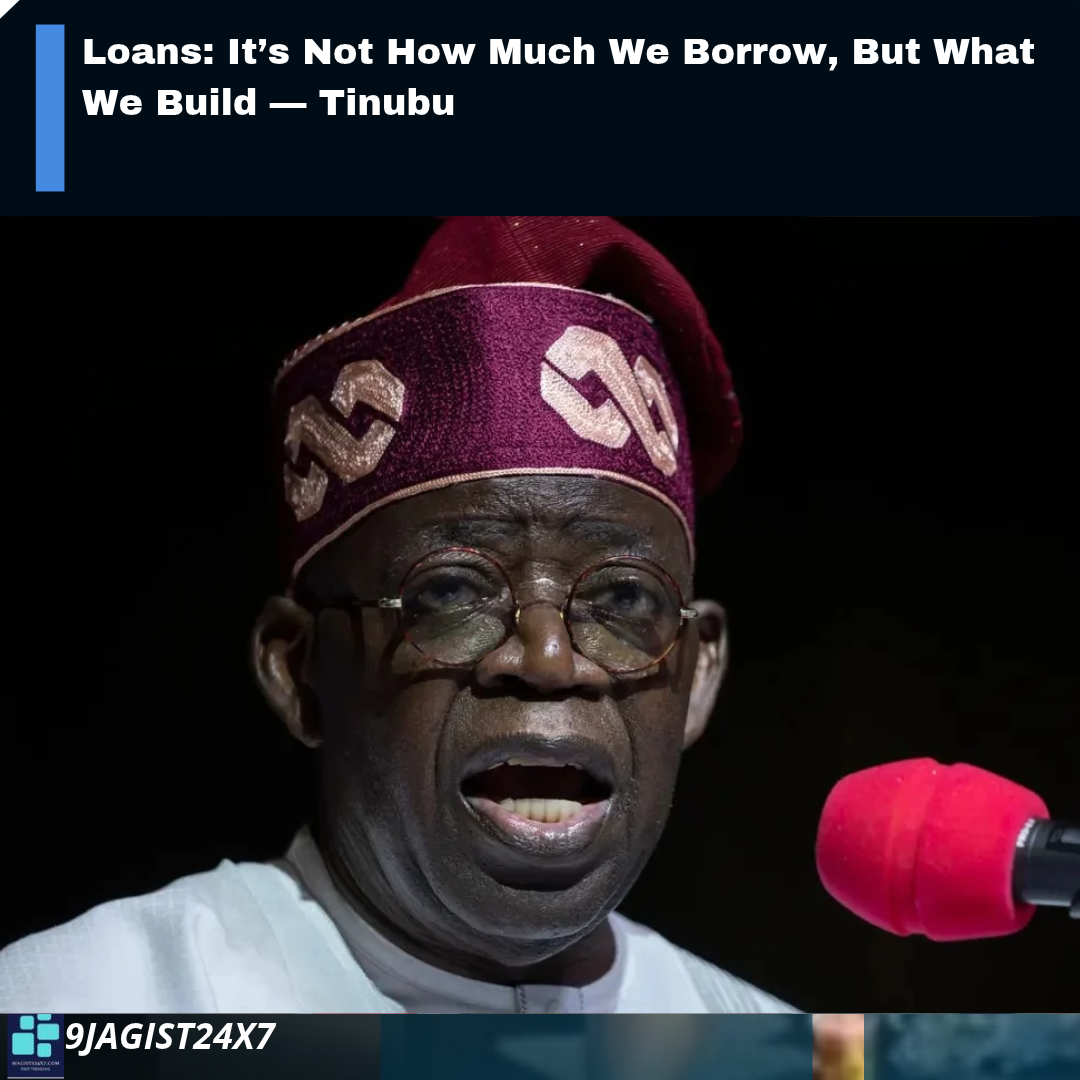
President Bola Tinubu has defended his administration’s external borrowing plans, saying the key issue is not the amount Nigeria borrows but whether the funds are used to build infrastructure that expands productivity and improves citizens’ lives.
Advertisements
In a statement titled From Reforms to Delivery: Our Infrastructure Investment and Growth Strategy, Tinubu said fresh loans would finance projects including the Lagos-Calabar Coastal Highway, Sokoto-Badagry Superhighway, Trans-Sahara Superhighway, electricity grid upgrades, and the modernisation of major commercial ports in Lagos.
Advertisements
“The real question is not how much we borrow, but what we build, what value we create and what future we leave behind,” the President said.
He argued that the Lagos-Calabar Coastal Highway could reduce logistics costs along its corridor by 15 to 20 per cent and add up to two per cent to Nigeria’s GDP through increased trade, tourism, and industrial activity. The project is also projected to create about 100,000 direct construction and engineering jobs, with more than 150,000 indirect jobs in logistics and related services.
Tinubu said Nigeria cannot achieve its target of a $1 trillion economy by 2030 with infrastructure designed for a much smaller economy. He added that investments in healthcare, education, and vocational training would complement the infrastructure programme by reducing logistics costs, connecting economic regions, and attracting private investment.
The President said reforms since May 2023—including petrol subsidy removal, exchange-rate unification, tax reforms, and anti-inflation measures—had restored macroeconomic stability and strengthened public finances.
He cited real GDP growth of 4.43 per cent in the second quarter of 2026, headline inflation falling to 14.63 per cent in September from 20.98 per cent a year earlier, and gross external reserves of $55.1 billion as of October 9, 2026, including about $46 billion in net reserves. He also said Nigeria’s tax-to-GDP ratio had risen to 12.5 per cent from 7 per cent.
Tinubu said improved investor confidence had reduced Nigeria’s cost of borrowing and country-risk premium, adding that longer-term financing would align repayment periods with the lifespan of infrastructure assets.
Nigeria Labour Congress President Joe Ajaero criticised the administration’s request for approval to obtain fresh external loans of $20.5 billion and €1.45 billion, asking why the government still needed to borrow despite claims of increased revenue after subsidy removal.
“If you come out to tell us that subsidy is gone, that you are making more money and then you are giving more money to states, what is the justification for continually borrowing from the International Monetary Fund and the World Bank and other agencies when there is enough money?” Ajaero said.
He argued that rising crude oil prices—citing a 2026 budget benchmark of $70 per barrel against prices above $100—should prompt the government to reconsider additional borrowing. Ajaero, however, clarified that the NLC cannot approve or reject loans and urged Nigerians and relevant institutions to demand accountability.
Advertisements