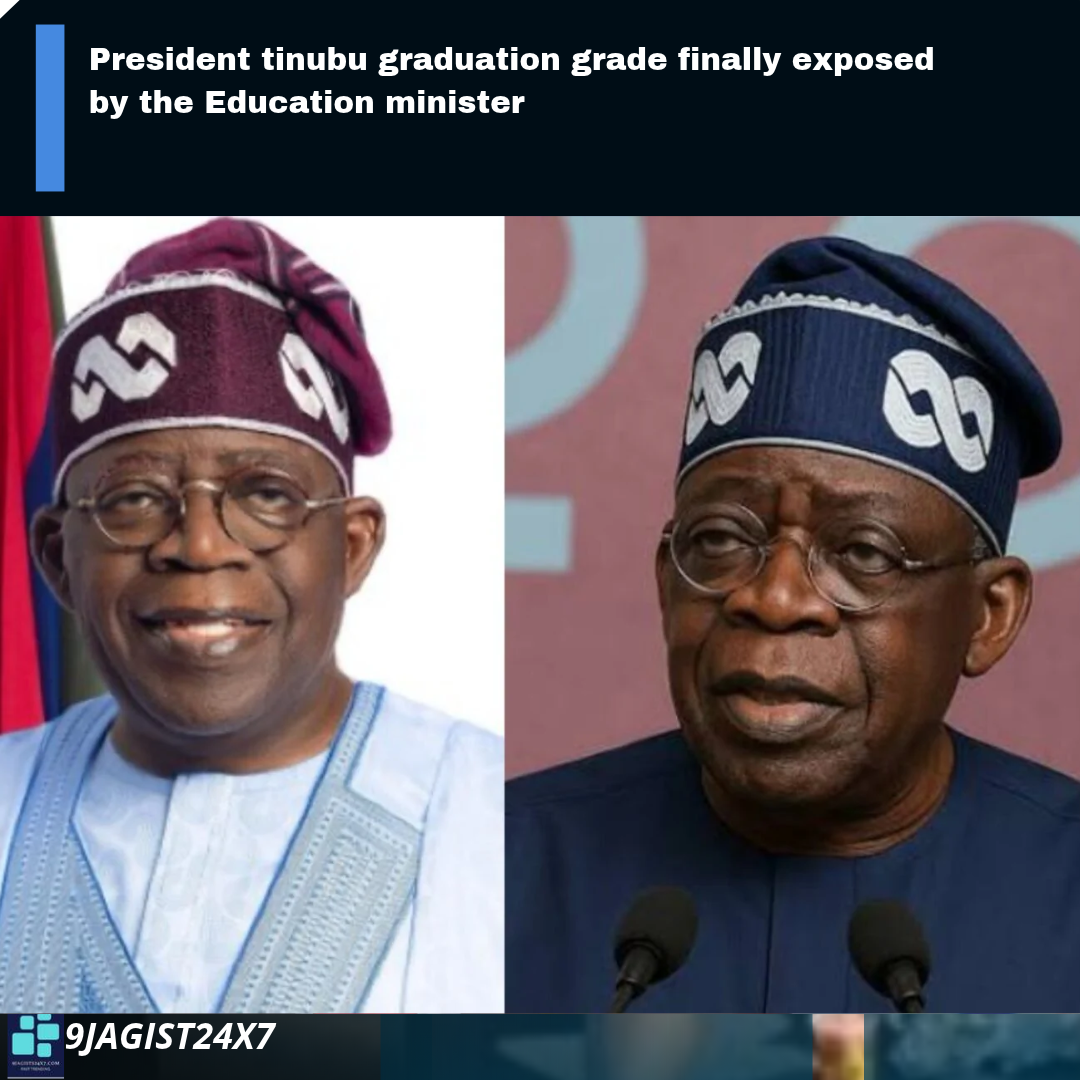
Education Minister Tunji Alausa has stirred fresh debate after claiming that President Bola Tinubu graduated with a first-class degree in accounting from Chicago State University in the United States. Alausa made the assertion during an interview on Channels Television on Tuesday, November 3, 2026, while defending the President’s educational background.
Advertisements
The minister said he was familiar with the institution because he lived in Chicago for almost 30 years and had personally met several people who studied alongside Tinubu. He also dismissed questions about the President’s intellectual ability, describing him as a genius.
Advertisements
When asked directly whether Tinubu graduated with first-class honours from the American university, Alausa replied, “In accounting, of course.”
Why the Claim Matters
Tinubu’s academic qualifications have remained a subject of public discussion, particularly after the controversy surrounding his Chicago State University records during the 2023 presidential election petition. The latest claim by Alausa has therefore reignited scrutiny of the President’s educational credentials.
The issue is not simply whether Tinubu attended university. Chicago State University has previously confirmed that he attended the institution and graduated in 1979, with accounting as his major.
The more contentious question is whether he graduated with a first-class classification. According to the report, available university records do not specify that Tinubu graduated with first-class honours.
That gap between the minister’s claim and the available records is what has fuelled the renewed debate. A first-class degree is a specific academic classification, and claims about it are usually verifiable through official transcripts, degree classifications, or institutional records.
Alausa’s Defence of Tinubu
Alausa did not limit his remarks to Tinubu’s academic record. He also praised the President’s performance in office, arguing that Tinubu had transformed Nigeria’s economy.
“Look at how he’s transformed a moribund country three years ago to a country that is growing,” the minister said.
That statement reflects the administration’s broader defence of its economic reforms. Supporters argue that difficult but necessary decisions have stabilised key sectors and positioned the country for growth. Critics, however, point to the continued burden of high living costs, poverty, insecurity, and limited access to basic services.
The interviewer challenged Alausa’s assessment, raising concerns about poverty and the number of out-of-school children in Nigeria. That exchange highlights the political tension surrounding the Tinubu administration: supporters emphasise reform and recovery, while critics focus on the immediate hardship many citizens continue to face.
The 2023 Certificate Controversy
Tinubu’s educational background became a major political issue during the 2023 presidential election petition. Questions were raised about the authenticity and details of his Chicago State University records, prompting intense public scrutiny and legal proceedings.
The university ultimately confirmed that Tinubu attended and graduated from the institution in 1979, with accounting as his field of study. That confirmation addressed the central question of attendance and graduation.
However, the current dispute concerns a more specific claim: whether Tinubu graduated with first-class honours. The report states that available records do not specify such a classification.
This distinction is important because a degree in accounting and a first-class degree in accounting are not the same thing. The former confirms completion of a programme; the latter makes a claim about academic performance.
Renewed Scrutiny Ahead of 2027
Alausa’s comments come at a politically sensitive time, with renewed attention on the educational qualifications submitted by presidential candidates ahead of the 2027 general elections.
In Nigeria, candidates’ credentials often become part of broader political battles. Questions about certificates, academic records, identity, and eligibility can dominate public debate, especially when they involve a sitting president or leading opposition figure.
The minister’s assertion may be intended to settle the matter, but it has instead added another layer to the controversy. Unless supported by an official transcript or university classification, the first-class claim is likely to remain contested.
What Would Settle the Debate?
The clearest way to resolve the question would be for Chicago State University to release or confirm the official academic classification attached to Tinubu’s degree. A transcript showing the grade classification, honours designation, or academic standing would provide a definitive answer.
Until then, the public is left with two competing narratives: the minister’s claim that Tinubu graduated with first-class honours in accounting, and the report’s observation that available university records do not specify that classification.
For now, the controversy underscores a familiar reality in Nigerian politics: questions about a leader’s credentials rarely disappear simply because officials defend them. They tend to return whenever new claims are made without matching documentary evidence.
Advertisements