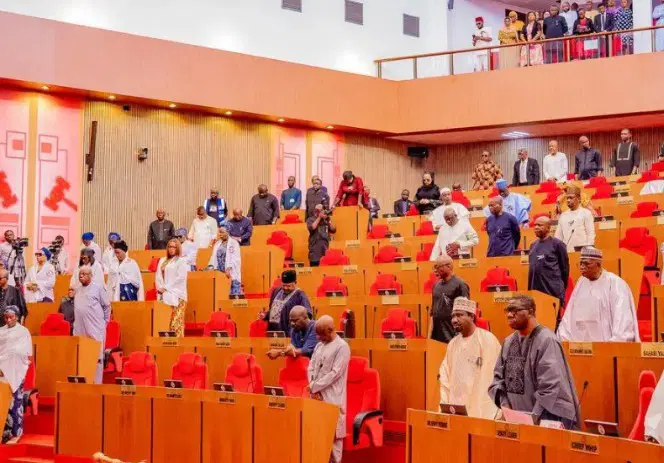
The Nigerian Senate has reversed course on a contentious decision made earlier in the week, scrapping an amendment to its Standing Orders that had restricted first-time senators from vying for the positions of Senate President and Deputy Senate President — effectively reopening the leadership race ahead of the 11th Assembly in 2027.
Advertisements
The original amendment, passed on Tuesday following a closed-door executive session, had introduced a strict seniority-based ladder for determining eligibility for Senate leadership positions. Under that framework, the contest for presiding offices would have prioritised former Senate Presidents, former Deputy Senate Presidents, former Principal Officers, senators with at least one completed term, lawmakers crossing over from the House of Representatives, and lastly, fresh senators — but only where no higher-ranked candidates were available. The rule also limited eligibility to senators returning from the current 10th Assembly who had secured re-election.
Advertisements
The reversal was passed on Thursday through a motion moved by Senate Leader Opeyemi Bamidele (APC, Ekiti Central) and presided over by Deputy Senate President Jubril Barau. Titled “Rescission and Re-Committal of Order 2(2) and Order 3(1) of the Senate Standing Orders, 2023, as amended,” the motion restored an open contest for leadership positions, making all newly elected senators eligible regardless of how many terms they have served.
Explaining the rationale behind the U-turn, Bamidele told the chamber that a subsequent legal and constitutional review of the Tuesday amendment had revealed potential conflicts with Section 52 of the 1999 Constitution, as amended. He argued that it was essential for the Senate’s Standing Orders to remain fully aligned with constitutional provisions, accepted parliamentary conventions, and established legislative practice.
Bamidele further noted that the Senate retains the inherent authority to revisit and rescind any of its earlier decisions in order to protect the integrity of its proceedings and legislative framework.
Beyond the constitutional concerns, the reversal carries significant political weight — it signals a shift within the ruling All Progressives Congress (APC) away from locking in the next Senate leadership through tenure-based restrictions, pointing instead toward a more open and competitive process for determining who will lead the chamber when the 11th National Assembly is inaugurated.
Advertisements