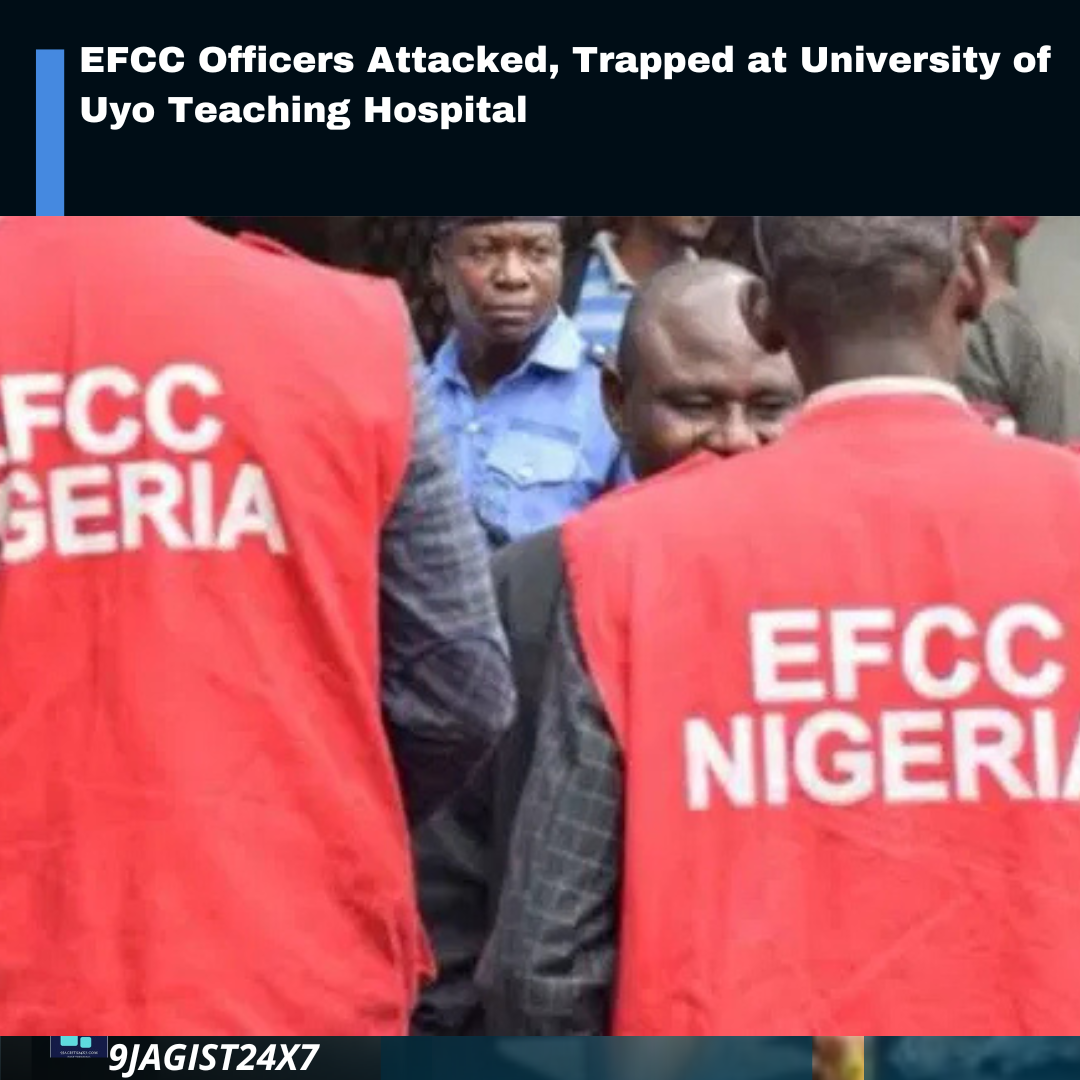
The Economic and Financial Crimes Commission has alleged that its operatives were assaulted and held against their will at the University of Uyo Teaching Hospital in Akwa Ibom State, during a routine visit connected to a fraud investigation.
Advertisements
The anti-graft agency’s spokesperson, Dele Oyewale, said the incident occurred when operatives went to the hospital to make further inquiries into a case involving a suspect accused of defrauding several microfinance banks in the state, including the University of Uyo Microfinance Bank. The suspect is currently facing trial over the alleged offences.
Advertisements
The visit arose from the hospital’s repeated failure to respond to official correspondence. According to the EFCC, the suspect had submitted a medical report as part of the investigation, which required verification from hospital management. The Commission said it sent letters on March 11 and April 20, 2026 requesting confirmation of the document, but neither received a reply. A subsequent personal follow-up by the investigating officer also yielded no response.
As a result, operatives were dispatched to meet directly with the Chief Medical Director. What followed, the EFCC alleged, was a deliberate attempt to obstruct their work. The CMD reportedly ordered the hospital gates shut, effectively trapping the operatives inside the facility. Staff members then allegedly pelted the officers with stones and other projectiles in what the agency described as an unprovoked assault.
The Commission added that police authorities in Akwa Ibom State intervened and urged the CMD to open the gates to allow the operatives a safe exit, but those appeals were reportedly ignored.
Despite the hostility, the EFCC said its officers maintained composure throughout the standoff and ultimately left the premises without disrupting the hospital’s operations.
In the aftermath, the Commission issued a stern warning to public institutions and private organizations, reminding them that cooperation with its investigations is not optional but a legal requirement. The agency cautioned that any interference with its lawful inquiries could attract criminal liability for obstruction.
Advertisements