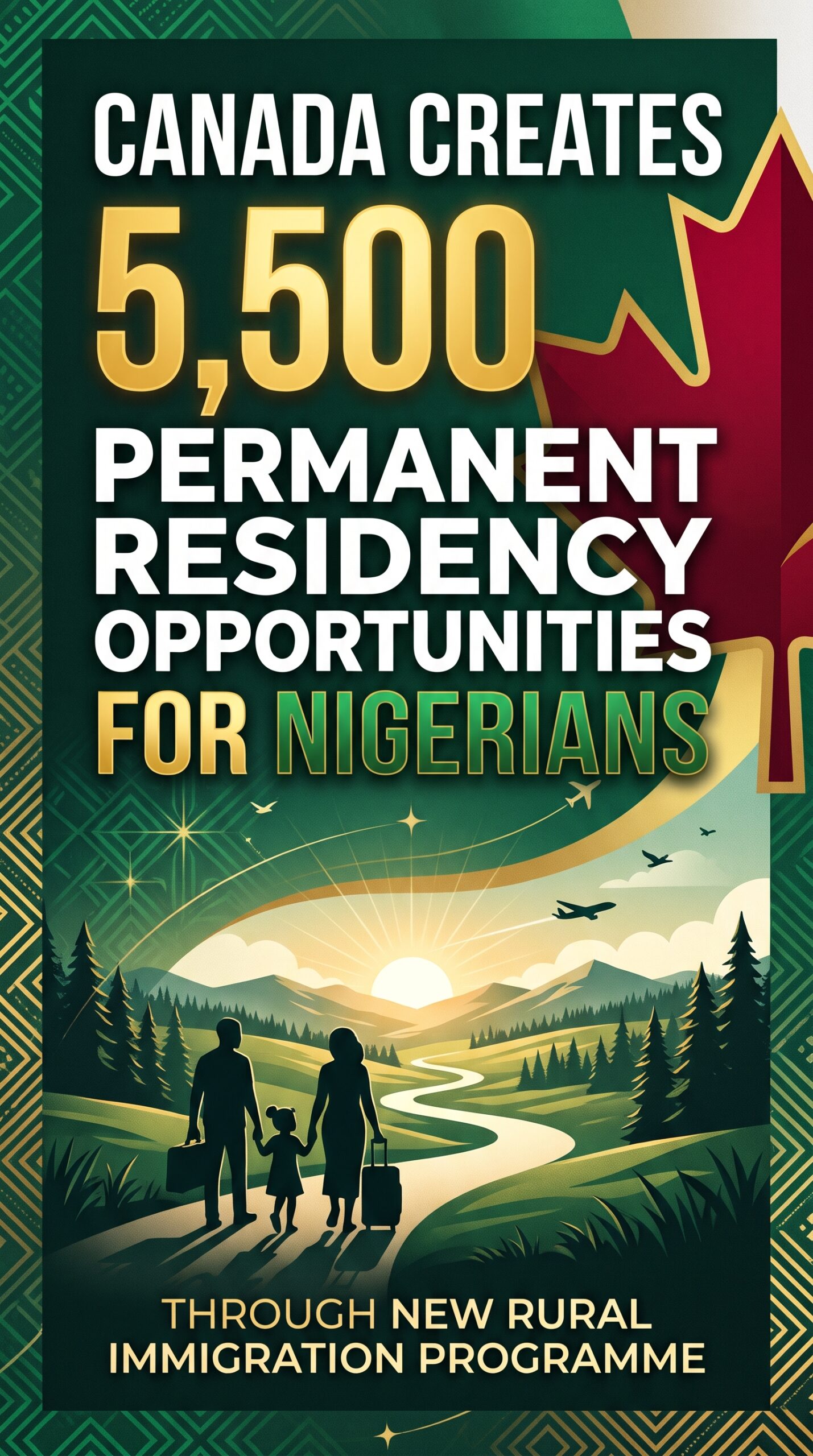
Canada has made its Rural Community Immigration Pilot (RCIP) a permanent programme, creating a new pathway for Nigerians and other foreign nationals to obtain permanent residency through jobs in smaller communities.
Advertisements
The programme is aimed at helping rural areas solve labour shortages by attracting skilled workers to businesses that cannot find enough local workers.
Advertisements
What the Programme Offers
Canada’s Minister of Immigration, Refugees and Citizenship, Lena Metlege Diab, announced the development on Monday, November 9, 2026, during a visit to Pictou County in Nova Scotia.
According to Immigration, Refugees and Citizenship Canada (IRCC), the programme will start with 14 participating communities and may later expand to more locations.
The Canadian government has set aside 5,500 admission spaces for the programme under its 2027–2029 Immigration Levels Plan.
How the Programme Works
Participating communities and approved employers can identify foreign workers whose skills match the needs of local businesses.
The programme is expected to help employers fill important jobs while giving newcomers and their families the opportunity to settle in rural communities.
Why Canada Made It Permanent
The permanent RCIP builds on two earlier immigration programmes introduced by the Canadian government.
These are the Rural and Northern Immigration Pilot, which ran from 2019 to 2024, and the Rural Community Immigration Pilot, which was launched in 2025.
According to IRCC, the earlier programme attracted more than 2,800 employers and supported the admission of over 12,500 applicants and their family members.
Between January 2025 and August 2026, participating communities approved more than 1,950 employers facing labour shortages. These employers issued over 4,700 job offers and community recommendations.
Healthcare, education, sales and services were among the sectors that benefited from the programme.
What Nigerians Need to Qualify
Nigerians who want to use the programme must first get a qualifying job offer from an approved employer in one of the participating communities.
Applicants must also meet the programme’s requirements, which include:
-
Relevant work experience.
-
Educational qualifications that meet Canadian standards.
-
Approved language test results.
-
Enough money to support themselves and their families after relocating, unless exempt.
-
A recommendation from the participating community.
Applicants must get the community recommendation before submitting their permanent residence application to IRCC.
However, getting a job offer or community recommendation does not automatically guarantee permanent residence. Applicants must still meet the immigration requirements and receive approval from Canadian authorities.
Other Options for Nigerians
Nigerians who do not qualify for the rural programme can also explore other permanent residency options, including the Provincial Nominee Program and Express Entry.
The new rural immigration pathway gives Nigerians another opportunity to move to Canada, especially those willing to live and work outside major cities.
How Nigerians can apply for permanent residency
Nigerians interested in using the programme must first secure a qualifying job offer from a designated employer in one of the participating communities.
Applicants must also meet the programme’s eligibility conditions, which generally include:
– Relevant work experience.
– Educational qualifications that meet Canadian requirements.
– Approved language test results.
– Sufficient funds to support themselves and their families after relocating, unless exempt.
– A recommendation from the participating community.
Applicants must obtain the required community recommendation before submitting their permanent residence applications to IRCC.
However, securing a job offer or community recommendation does not automatically guarantee permanent residence. Applicants must still satisfy the relevant immigration conditions and receive approval from Canadian authorities.
Interested Nigerians can check the participating communities, designated employers and application requirements on the official IRCC website.
Advertisements