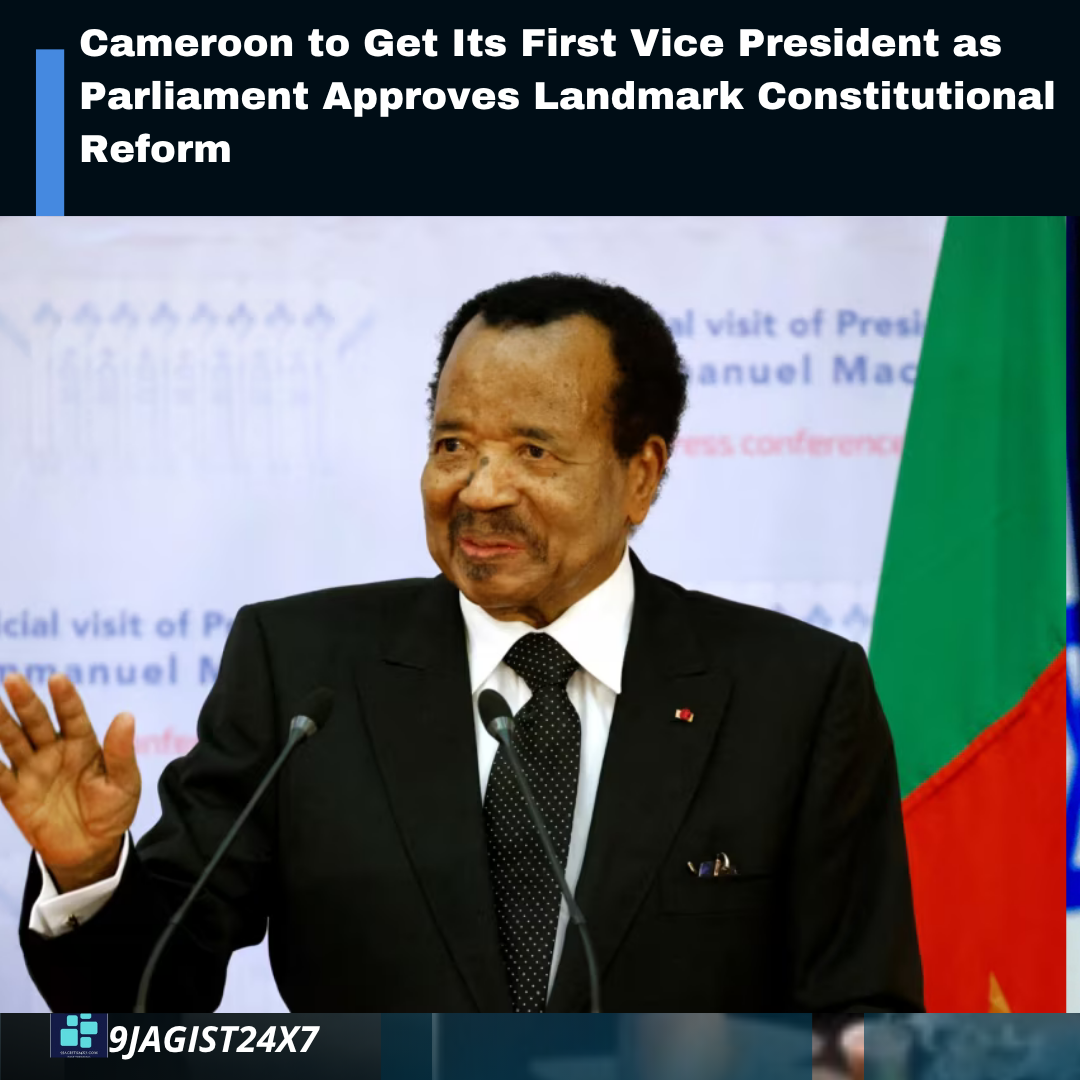
After more than forty years in power, Cameroonian President Paul Biya is set to govern alongside a vice president for the first time, following the passage of sweeping constitutional amendments by the country’s parliament.
Lawmakers meeting in a joint session of the National Assembly and Senate both dominated by Biya’s ruling party approved the bill by an overwhelming margin of 200 votes to 18, with four members abstaining.
Under the new legislation, the vice president would automatically ascend to the presidency in the event of Biya’s death, resignation, or incapacitation. However, the role comes with notable limitations: the appointee would be barred from initiating any constitutional amendments and would be ineligible to contest the subsequent presidential election. The vice president would also serve only for the remainder of the sitting president’s seven-year term.
Crucially, the power to appoint — and dismiss — the vice president rests entirely with the president, raising questions about the independence of the position.
Biya, who has governed the Central African nation since 1982, is 92 years old and holds the distinction of being the world’s oldest serving head of state. Open discussion about his health remains legally prohibited in Cameroon.
Previously, the constitution provided for the Senate president to serve as a brief caretaker in the event of a presidential vacancy, pending fresh elections. The new amendment fundamentally alters that line of succession.
Not everyone welcomed the changes. The Social Democratic Front (SDF), one of the few opposition parties with parliamentary representation, boycotted the vote entirely. The party had advocated for a vice president to be elected jointly with the president rather than handpicked by them. The SDF also pushed for a constitutional arrangement reflecting Cameroon’s delicate linguistic divide one that would distribute the country’s two highest offices between its Anglophone and Francophone communities, as was the practice before 1972.
SDF chairman Joshua Osih did not mince words in his assessment, saying the reform “could have been a moment of political courage,” but ultimately amounted to “a missed historic opportunity.”