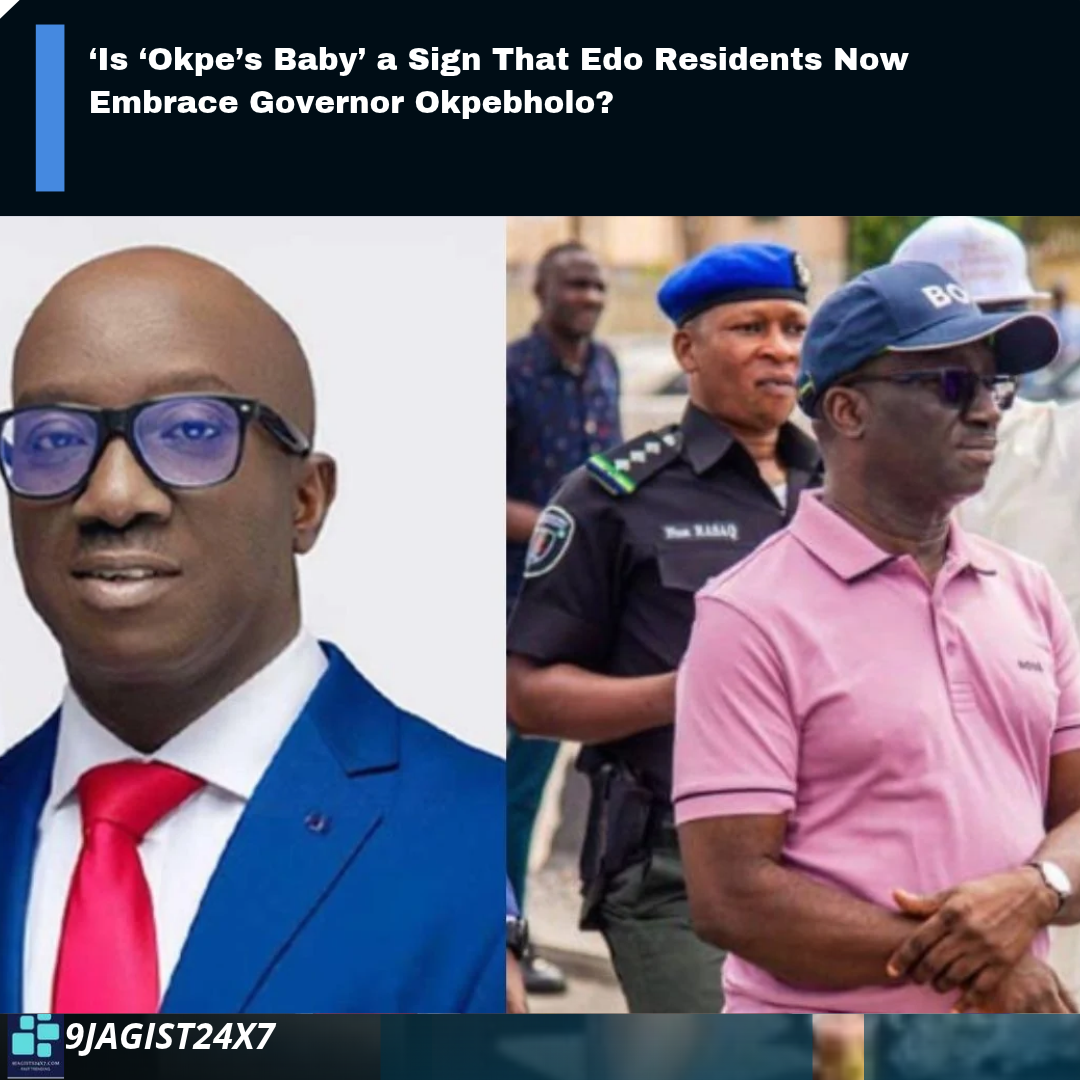
Edo State Governor Monday Okpebholo says the way residents treat him on the streets has changed dramatically, revealing that they now affectionately call him “Okpe’s baby” instead of insulting him. The governor made the claim during a live broadcast on ITVRadio, where he recalled walking along Sapele Road in Benin City and receiving warm greetings from passers-by.
Advertisements
Okpebholo said the new nickname replaced an earlier, less flattering label, “Akpako Rescue.” According to him, residents who once threw sachets of water at him now greet him with affectionate names—a shift he described as a source of personal joy and political validation.
Advertisements
“They have even changed my name from Akpako Rescue to Okpe’s baby,” the governor said. “These things give me joy because I walk freely on the street; instead of throwing pure water at me, they are giving me sweet names.”
A Governor’s Public Reception
The governor’s comments offer a rare, self-reported measure of public sentiment. In Nigerian politics, street reception is often treated as a symbolic indicator of a leader’s connection with ordinary residents, particularly in a state where political loyalty can be intensely personal and highly visible.
Okpebholo’s account suggests he believes his administration has improved its standing among Edo residents. His reference to walking freely through Benin City was meant to contrast his current experience with a past marked by hostility, mockery, or public displeasure.
The nickname “Okpe’s baby” appears to carry a familiar, community-based tone. It links the governor to his Okpe identity while framing him as someone embraced by the people. That kind of language can be politically valuable, especially for a leader seeking to present himself as accessible and locally rooted rather than distant from everyday concerns.
From Insults to Affection?
The governor’s narrative is striking because it presents a clear before-and-after story. He said residents previously called him “Akpako Rescue” and sometimes threw sachets of water—commonly called “pure water”—at him. Now, he claims, those same public encounters produce warm greetings and a new nickname.
That contrast is important because it frames his tenure as one that has earned growing public acceptance. For a governor, such a message serves both a personal and political purpose: it signals confidence in his leadership while also suggesting that criticism from residents may be softening.
However, the claim is based on the governor’s own experience and statements during a broadcast. It does not independently establish broad public approval across Edo State. Street greetings in Benin City, while meaningful, are only one form of public feedback and may not fully reflect the views of residents in rural areas, opposition-leaning communities, or those affected by policy decisions.
Praise for Tinubu’s Reforms
During the same broadcast, Okpebholo also praised President Bola Tinubu’s economic reforms. He pointed to changes in commodity prices and the foreign exchange market as evidence that conditions were improving.
That endorsement aligns the Edo governor with the federal government’s reform agenda. By linking improvements in prices and exchange-rate conditions to Tinubu’s policies, Okpebholo is positioning himself as a supporter of the president’s economic direction and potentially strengthening APC political cohesion ahead of future elections.
The governor’s remarks come at a time when economic reforms remain a major public issue in Nigeria. Claims that prices are stabilising or that the foreign exchange market is improving can resonate with supporters of the reforms, but they may also invite scrutiny from residents who continue to feel the impact of living costs, wages, and access to essential goods.
Why the Nickname Matters
Nicknames can carry more political weight than they first appear to. A flattering nickname can become shorthand for a leader’s public image, helping supporters reinforce a positive narrative. Conversely, a mocking nickname can linger as a symbol of dissatisfaction.
Okpebholo’s decision to publicly celebrate “Okpe’s baby” suggests he sees the label as more than a casual greeting. He presented it as evidence that Edo residents have shifted from hostility to warmth. In political communication, that kind of anecdote helps a leader tell a story of redemption, acceptance, and growing popularity.
It also allows the governor to respond indirectly to critics. Rather than addressing specific criticisms of his administration, he framed public treatment of him as proof that perceptions are changing. The message is simple: if residents now greet him warmly rather than insult him, then his leadership is gaining acceptance.
The governor’s comments serve several purposes at once. They portray him as accessible, celebrate his connection with ordinary people, and reinforce support for President Tinubu’s economic agenda.
They also come with an implicit challenge to critics. By saying he now walks freely and receives “sweet names,” Okpebholo is effectively arguing that the public mood has turned in his favour. Whether that perception holds beyond his personal encounters will depend on broader measures of public opinion, including residents’ views on governance, infrastructure, security, jobs, and the cost of living.
For now, the governor’s story is a vivid example of how Nigerian politicians use everyday interactions to communicate political strength. “Okpe’s baby” may be a lighthearted nickname, but for Okpebholo, it represents something much bigger: a claim that the people of Edo State have moved from resentment to embrace.
Advertisements