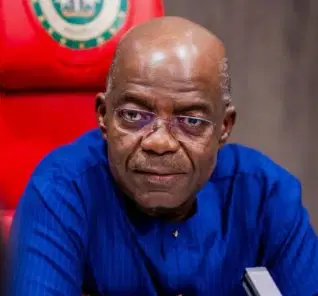
Abia State Governor Dr Alex Otti has urged Ndigbo to respond to the growing presence of Chinese traders in Lagos’ retail sector not through confrontation, but by shifting away from conventional trading and moving decisively into manufacturing and digital commerce.
Advertisements
Otti argued that the changing landscape of commerce — particularly the emergence of Chinese competitors in a retail space long dominated by Igbo entrepreneurs — should push Ndigbo to rethink their economic strategy rather than fight to preserve an outdated trading model.
Advertisements
He made the remarks Monday night at the Michael Okpara Auditorium in Umuahia, during the Igbo Day lecture and dinner organised by Ohanaeze Ndigbo Worldwide.
“We are leaving that place of trading. In Abia, we have markets; the markets are important. But we are moving from the market to manufacturing,” Otti said.
Positioning Abia as a tech and manufacturing hub
According to the governor, Abia is deliberately repositioning itself as a manufacturing and technology hub, with his administration investing in digital skills training and encouraging young people to plug into the global digital economy. “We are driving digital delivery. We are leaving that physical store for digital delivery. So, when somebody talked about Alibaba, that’s exactly where we are headed,” he said.
Rather than viewing the rise of Chinese retail competition purely as a threat, Otti framed it as a signal that the global economy is shifting — one Ndigbo should adapt to rather than resist. “So, why are the Chinese coming to compete with us? We are moving away from there. And it’s going to start in Abia,” he said. “Abia is both manufacturing and then trading. But we are moving from conventional trading to digital trading. That’s where the world is going. You either embrace it or you risk being left behind.”
He pointed to his administration’s TechRise initiative as central to this strategy, saying it’s designed to equip young Abians with the skills needed to compete in the digital economy. “When I spend money here training my young people in digital technology under the TechRise initiative, I know what I am doing. Some of them are already working for Google and Amazon from Aba,” he said.
Ohanaeze sounds a note of caution
President-General of Ohanaeze Ndigbo Worldwide, Senator John Azuta-Mbata, struck a more cautious tone, saying the growing Chinese presence in Lagos retail trade should heighten alertness among Ndigbo — particularly given that retail has historically been one of the strongest pillars of Igbo economic enterprise.
He argued that the moment calls for Ndigbo to move beyond individual commercial success toward a coordinated strategy for protecting and expanding their collective economic interests, noting that the community has long demonstrated enterprise, resilience, and individual brilliance without fully converting those strengths into organized development.
Azuta-Mbata pointed to the Igbo Charter for Strategic Engagement for National Development — a framework prepared by more than 67 Igbo technocrats and business leaders — as a tool for engaging both the Nigerian state and the wider world. He also called for stronger protection of Igbo language and culture, proposing that Igbo be made compulsory in primary and secondary schools across the South-East, and urged the Federal Government to find a political resolution to the continued detention of IPOB leader Mazi Nnamdi Kanu.
“Take our destiny in our hands”
Chairman of the occasion, Chief Onyema Ugochukwu, called on Ndigbo to move past grievance and take concrete steps toward shaping their collective future. “We must look forward to building a brighter future, moving beyond complaining about those who won’t give us our due, to taking our destiny in our own hands,” he said, while commending Otti’s governance record in Abia and praising Ohanaeze for sustaining the annual Igbo Day celebration.
Otti, in turn, pledged his administration’s continued support for Ohanaeze, saying this year’s theme — “Njikọ Ka” (“Unity is Supreme”) — reflected the importance of collective action in driving development. “We have retrieved and recovered our state. And the only way to go is up. Once you have laid the foundation, the only way to go is up,” he said.
Professor Kingsley Moghalu, Chairman of the Igbo Charter Committee for Strategic Engagement for National Development, delivered the keynote lecture at the event, which drew a wide range of dignitaries including Senator Enyinnaya Abaribe, Deputy Governor Engr. Ikechukwu Emetu, former Deputy Governor Dr Ude Oko Chukwu, members of the National Assembly, traditional rulers, clergy, and business leaders from across the country.
Advertisements