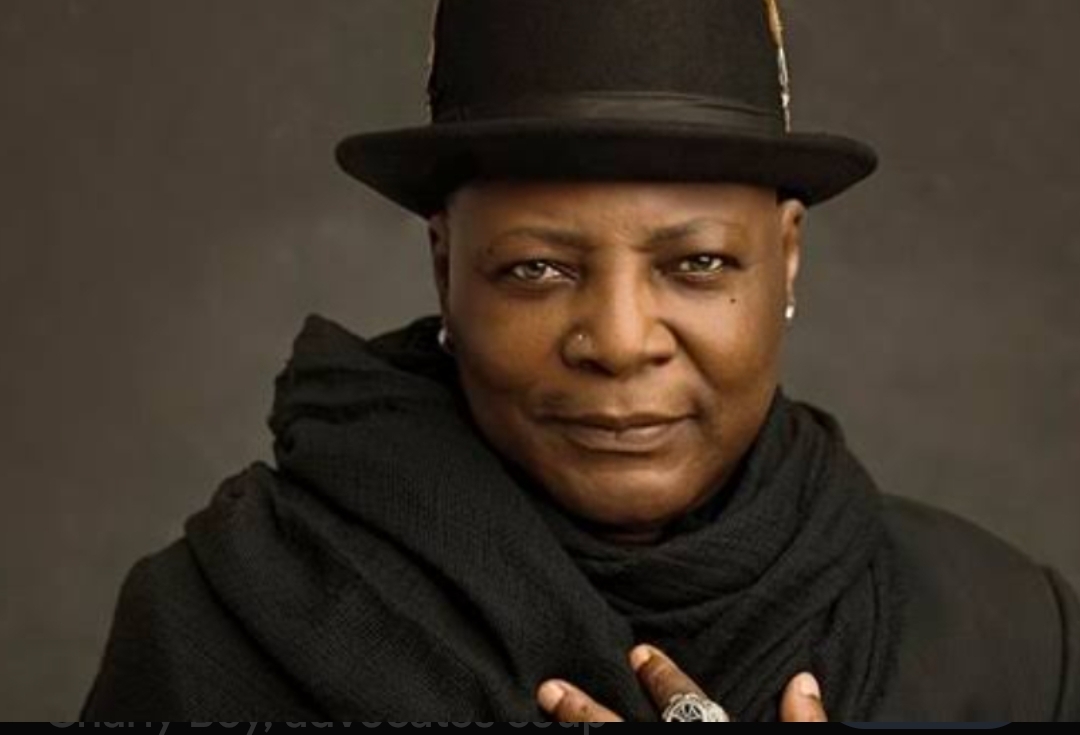
Veteran Nigerian entertainer Charles “Charlyboy” Oputa has issued a further response to online criticism of his daughter’s engagement, reiterating that as a 50-year-old woman with children of her own, she is entitled to make decisions about her personal life without outside interference.
Advertisements
What he said
Advertisements
In a post shared online, Charlyboy argued that his daughter has “already lived enough life to know herself” and is therefore not someone who can be told how to live. He said that while he retains the right, as a father, to offer advice and share his opinion, he does not believe he has the authority to control the choices of another adult. He noted that his daughter — who has five children and a great-grandchild — remains his daughter regardless of the path she chooses, and referenced her prior marriage, which he described as difficult, before she entered her current relationship. He also drew a comparison to his own life, noting that his father was unable to stop him from becoming the public figure he chose to be, and said he cannot now claim that right over his daughter.
The generational-autonomy angle
Framed as a broader statement on parenting and adult independence, Charlyboy’s remarks read as an argument that parental influence should have limits once children reach adulthood — a position that resonates with ongoing conversations in Nigerian society about the tension between filial deference and individual self-determination, particularly for women.
The consistency-and-credibility angle
Not all reaction has been sympathetic. Some critics have pushed back on Charlyboy specifically, arguing that by publicly endorsing his daughter’s choice rather than simply staying neutral, he has taken an implicit position on same-sex relationships — a socially and legally sensitive subject in Nigeria — and should either own that stance directly or refrain from framing his support purely as “a father’s love,” which they see as dodging the substance of the criticism.
The cultural and religious angle
Because Nigeria’s legal and religious climate is broadly unaccommodating toward same-sex relationships, the engagement itself — not just Charlyboy’s response to it — has become a flashpoint. Commentary reflects that divide, with some invoking religious language to condemn the relationship, illustrating how a personal family matter can quickly become entangled in wider societal debates over morality, law, and public figures’ influence.
Advertisements