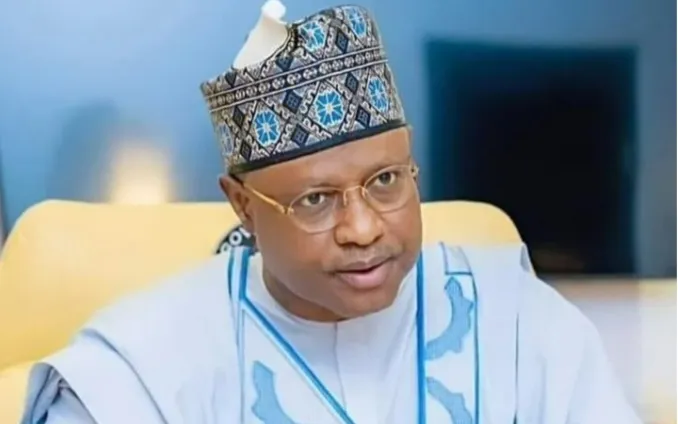
Kaduna State Governor Uba Sani has voiced strong backing for President Bola Tinubu’s re-election prospects in 2027, arguing that online sentiment is a poor predictor of actual voting behaviour.
Advertisements
In an interview on Channels Television, the governor drew a sharp distinction between what trends on social media and what happens when Nigerians cast their ballots, suggesting the two rarely align.
Advertisements
He put it plainly: a Tinubu defeat would only be conceivable if votes were cast on platforms like Twitter, Facebook, or Instagram. At the physical polling unit, he projected the President would secure roughly 70 percent of the vote.
Sani’s comments arrive as political momentum builds toward the 2027 cycle, with digital platforms continuing to shape and sometimes distort the national conversation around electoral politics.
His remarks are widely seen as a subtle reference to the Labour Party’s Peter Obi, whose 2023 presidential campaign was propelled by an enormous online following, yet fell short of victory on election day a point that supporters of the ruling APC frequently revisit when dismissing internet-driven opposition.
At the heart of Sani’s position is a broader argument familiar to Nigerian political watchers: that grassroots organisation, local structures, and ground-level mobilisation remain the true determinants of electoral outcomes and that it is in those spaces, not comment sections, where the 2027 contest will ultimately be decided.
Advertisements