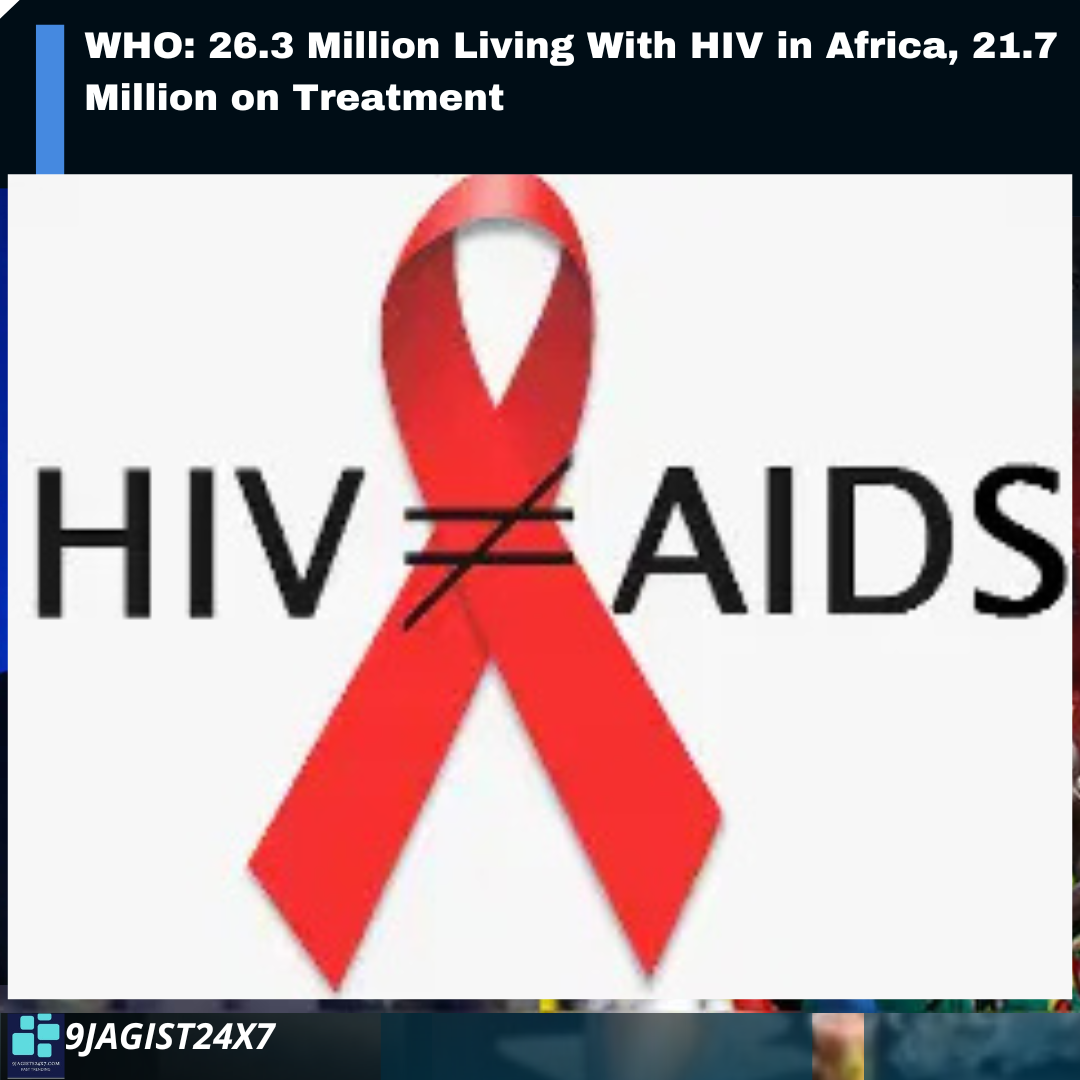
The World Health Organisation estimates that 26.3 million people in its African Region are living with HIV, with about 21.7 million receiving antiretroviral therapy.who+1
Advertisements
That leaves roughly 4.6 million people in the region without treatment, even as countries report progress in reducing new infections and expanding access to care.
Advertisements
The figures were highlighted by WHO Regional Director for Africa, Dr Mohamed Janabi, in a message ahead of World AIDS Day 2026, marked annually on December 1.
WHO’s African Region remains the most affected in the world, accounting for about half of all new HIV infections globally.
At the end of 2025, an estimated 41 million people were living with HIV worldwide, meaning the African Region accounts for nearly two-thirds of the global total.
Janabi said the region had recorded declining new infections in several countries and improved access to treatment, but millions still faced barriers to essential prevention and healthcare services.
The 2026 theme: access
This year’s World AIDS Day theme is “Ending AIDS starts with access.”
The theme focuses on ensuring that scientific breakthroughs and available medical interventions reach everyone who needs them—not just those with money, proximity to cities or the right information
Janabi said access to prevention empowers people to protect themselves, testing helps people know their status, and treatment allows people living with HIV to lead long and healthy lives.
He also stressed that confidential healthcare free from stigma and discrimination is essential for people to receive care with dignity.
What is blocking access
The WHO regional director identified several barriers keeping people out of care:
-
Long distances to health facilities.
-
Transportation costs.
-
Medicine stock-outs.
-
Stigma and discrimination.
-
Punitive laws.
-
Gender inequalities.
He warned that these barriers could lead to undetected infections, delayed treatment and missed opportunities to prevent further transmission.
Why Nigeria matters in this fight
Nigeria is one of the countries central to the continent’s HIV response. An estimated two million Nigerians are living with the virus, and the country ranks among those with the highest burden globally.
UNAIDS has also identified Nigeria as one of six countries facing a “triple threat”: high HIV burden, low treatment coverage and little or no decline in new infections.
The country has also recorded a sharp decline in access to pre-exposure prophylaxis, or PrEP. UNAIDS reported that the number of people receiving PrEP at least once in 2025 fell by more than half in Nigeria, Cameroon and Zambia.
That matters because prevention gains can be reversed quickly when funding and access weaken.
Janabi called on governments to sustain investments in HIV prevention, testing, treatment and care while addressing the structural and social barriers that keep people out of the health system.
He also urged development partners to support countries in making new prevention tools widely available, particularly in underserved communities.
“People living with HIV have helped lead this response from the beginning. Their experience must continue to guide the decisions we make about how and where care is provided,” he said.
What individuals can do
-
Know your HIV status through testing.
-
If positive, start and stay on treatment.
-
Use prevention options such as condoms and PrEP where appropriate.
- Challenge stigma in families, workplaces and religious spaces.
- Confirm information through WHO, UNAIDS, NACA or a licensed health facility.
Advertisements