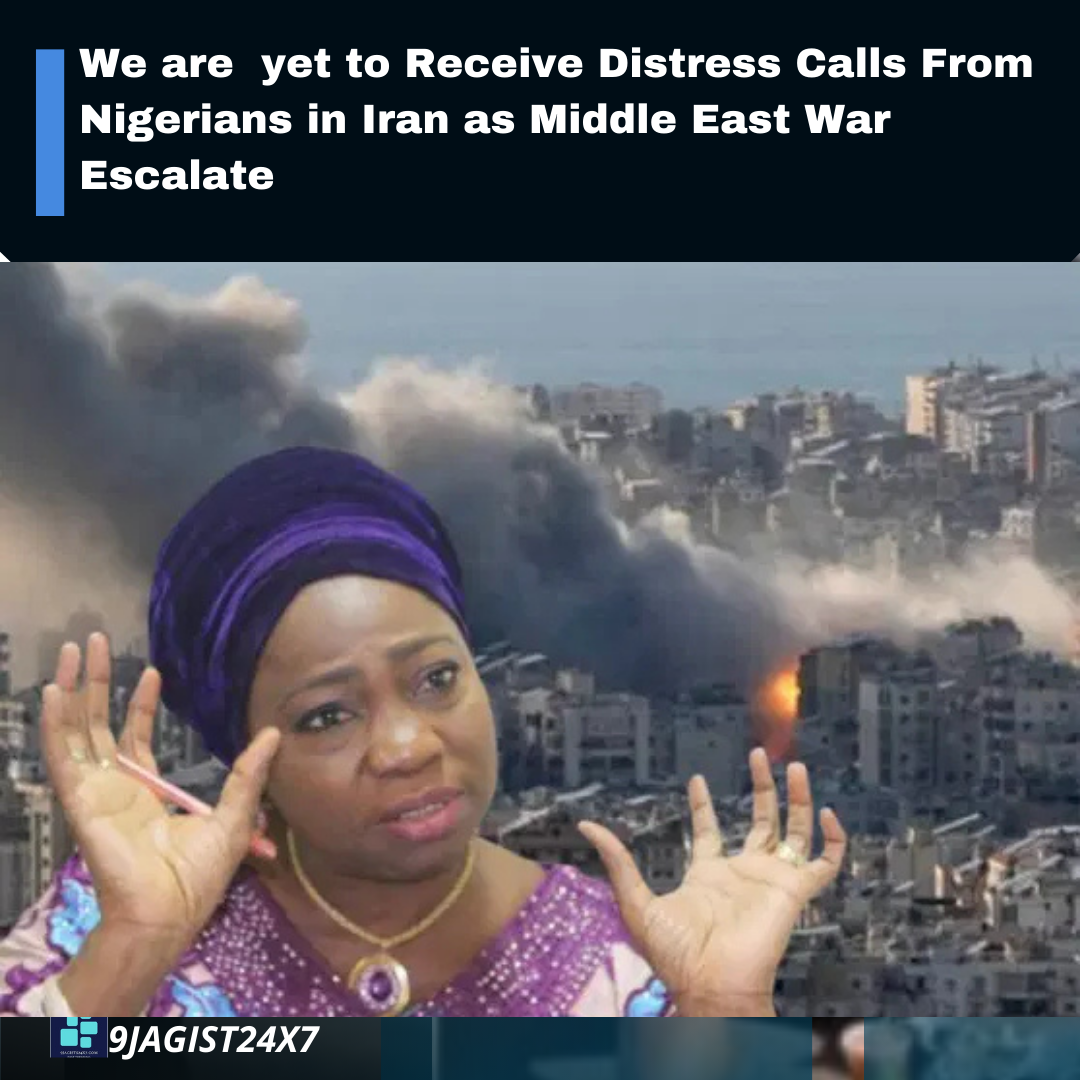
The Nigerian government says it has not yet heard from any of its citizens trapped in Iran as fighting between Tehran, the United States, and Israel continues to intensify — even as the conflict ripples outward and begins to squeeze Nigeria’s economy.
The Nigerians in Diaspora Commission, NiDCOM, confirmed on Monday that no formal distress calls had been received from Nigerians in the country, while the Federal Ministry of Foreign Affairs said it was closely watching developments in the region.
“I’m not saying there are no Nigerians there, I’m only saying nobody has sent any distress call,” NiDCOM’s Director of Media and Public Relations, Abdur-Rahman Balogun, told Vanguard.
Evacuation on Hold as Airspace Shuts Down
Any immediate rescue effort faces a significant obstacle: all commercial flights to the region have been suspended. Balogun was blunt about the realities on the ground, noting that no airline would operate in an active conflict zone. He suggested that a brief ceasefire — lasting two to three days — would be the most realistic window for evacuating stranded nationals, but said no such arrangement had yet been made.
Should Nigerians formally request evacuation, Balogun said the Federal Government stood ready to act, including chartering aircraft if necessary. However, he stressed that affected citizens must take the first step. “You cannot force them; people went there voluntarily,” he said, drawing a parallel with earlier evacuations from Sudan and Ukraine where some Nigerians initially refused to leave.
He also noted that NiDCOM does not maintain embassies and directed all inquiries about the number of Nigerians currently in Iran to the Ministry of Foreign Affairs, which oversees diplomatic missions abroad. Nigeria’s lack of an active international carrier further complicates any coordinated response.
The Foreign Ministry, for its part, said it is weighing evacuation as an option and will act once conditions on the ground stabilize.
War Spreads, Oil Prices Spike
The broader conflict showed no signs of easing. Lebanon-based Hezbollah entered the war on Monday, launching an attack on a British air base in Cyprus in a significant escalation that extended hostilities beyond the Middle East. The ripple effects reached Nigeria almost immediately — the price of Bonny Light crude surged to $80 per barrel, up sharply from $70 on Sunday and the highest it has traded since July 2025.
Protests Erupt on the Streets of Lagos
The conflict also stirred tensions at home. Dozens of demonstrators marched through the Maryland area of Lagos on Monday, chanting anti-US and anti-Israel slogans and calling for global condemnation of what they described as foreign interference in sovereign nations. The protest drew enough attention to cause passers-by to avoid the area entirely.
The demonstrations followed similar protests held across Kano, Sokoto, Gombe, Niger, Kaduna, Bauchi, and Yobe states on Sunday, where Shi’ite groups took to the streets to condemn the killing of Iran’s Supreme Leader, Ayatollah Ali Khamenei.