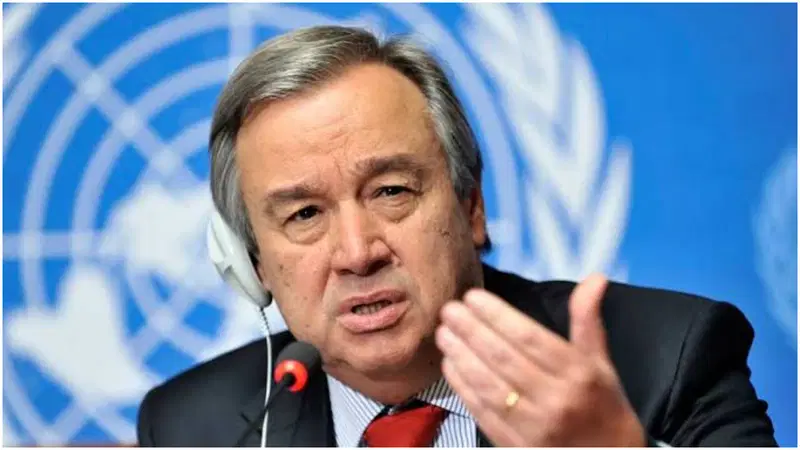
UN Secretary-General António Guterres has renewed calls for the full decolonisation of Western Sahara and 16 other territories that remain under colonial rule.
Speaking at the opening of the 2026 session of the UN Special Committee on Decolonisation (C-24), Guterres urged member states to redouble efforts to complete what he described as “unfinished business” — ending colonial rule more than six decades after the UN began its formal decolonisation campaign.
“From its earliest days, this organisation was created as a place where nations could meet as equals — not as rulers and ruled,” he said, reminding delegates that decolonisation lies at the heart of the UN’s founding mission.
The Secretary-General warned that the legacy of colonialism still shapes global realities today, leaving behind deep structural imbalances. He noted that its effects persist in economic exploitation, systemic racism, inequality, and exclusion from decision-making processes.
The C-24, established by the General Assembly in 1961, monitors progress toward independence for territories that have yet to achieve “a full measure of self-government,” as outlined in Chapter XI of the UN Charter. Its work is guided by the 1960 Declaration on the Granting of Independence to Colonial Countries and Peoples.
Guterres outlined key priorities for the next phase of the decolonisation process, including fostering inclusive dialogue among non-self-governing territories, administering powers, and member states. He emphasized that each case must be handled individually and in accordance with the UN Charter and relevant General Assembly resolutions.
Since 1945, more than 80 former colonies — representing over 750 million people — have achieved independence under the UN’s auspices.