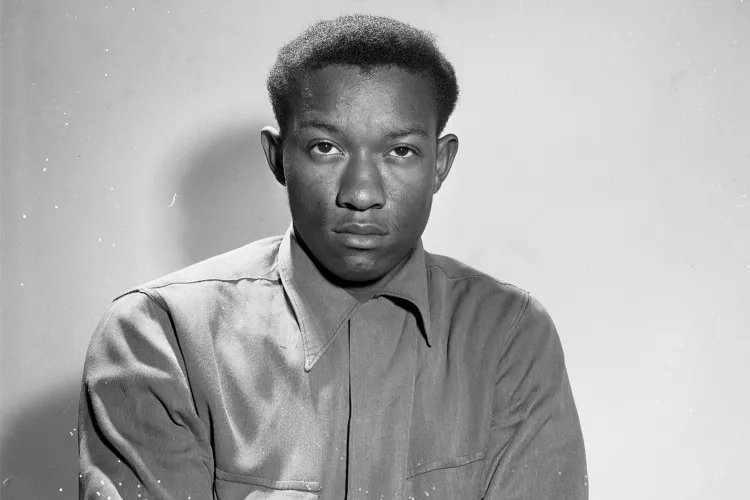
A black teenager who was convicted and ex£cuted for the murd£r of a white woman has now been declared innocent years later and his son says this brings him some peace.
In 1953, police arrested Tommy Lee Walker and charged him with the murd£r of Venice Parker.
The White store clerk had been s£xually assaulted and st@bbed while waiting for the bus after her shift at a nearby toy store, and after flagging down a car, she was taken to a local hospital, where she was later pronounced de@d from her injuries.
Two individuals later told police that they saw Walker in the area that night, though neither had witnessed the crime, according to the copy of the appellate court’s 1956 decision denying Walker’s appeal.
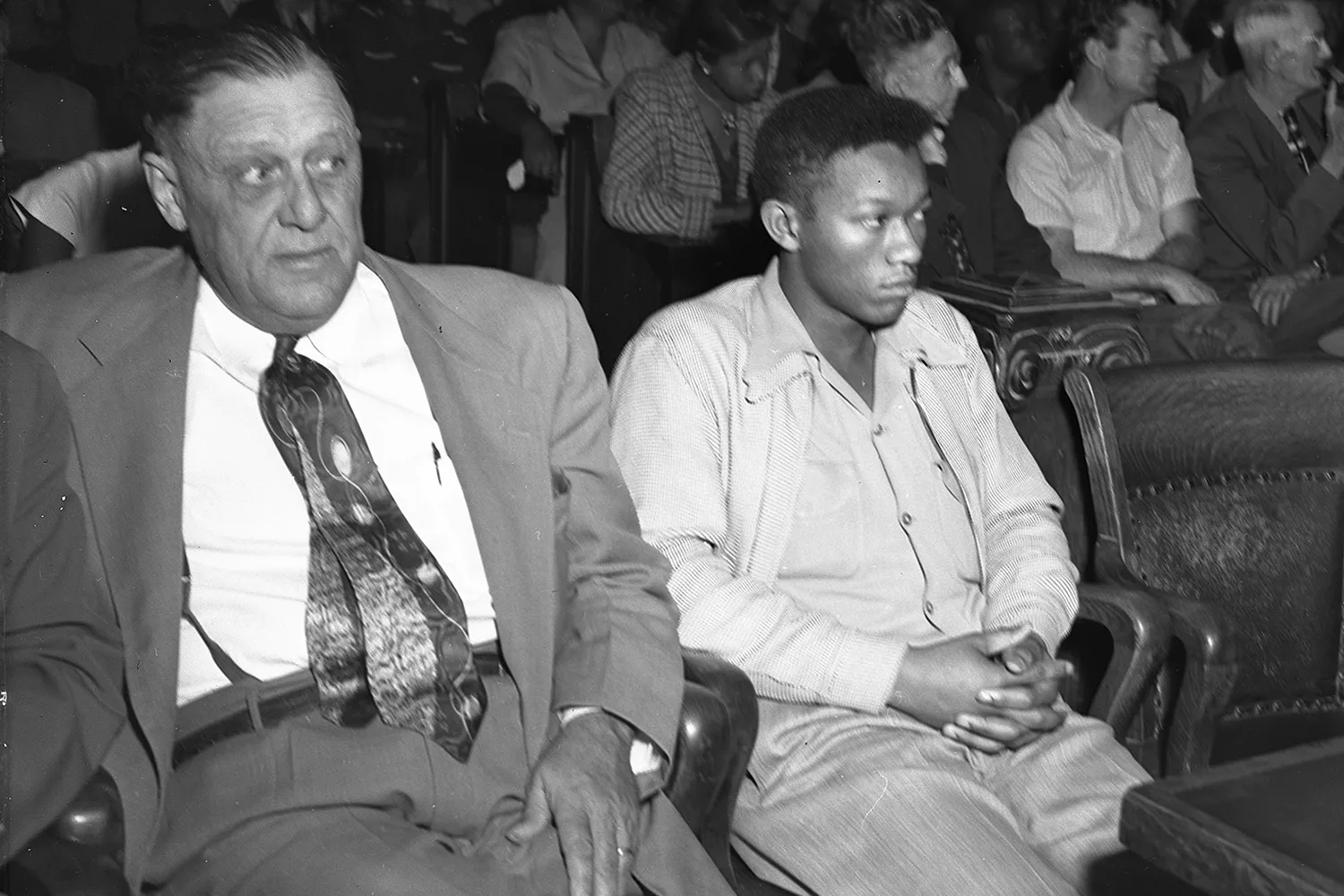
The victim, meanwhile, had been unable to speak because her throat had been slit, according to research done by the Innocence Project. But the officer who interviewed her moments before her de@th alleged that the woman identified her attacker as a Black man.
Four months later Walker was arrested by Dallas Police Homicide Bureau Chief Will Fritz, who was allegedly a member of the Ku Klux Klan at one point, according to the Innocence Project.
Walker declared his innocence from the start and had a solid alibi — he was at the birth of his first and only child at the time, something 10 eyewitnesses confirmed and testified to at trial.
Yet, after hours of intense questioning, which included threats of the electric chair and claims of evidence that did not exist, a worn-down Walker finally agreed to sign two statements confessing to the crime.
The first statement was riddled with inaccuracies, according to the Innocence Project. The second was recanted by Walker moments after he signed. And even under duress, Walker at no point confessed to r@ping Parker.
“We now know, through decades of research and wrongful convictions, that the tactics used against Mr. Walker — threats of the de@th penalty, isolation, and deception, as well as the blatant racism in this case, increase a person’s stress and mental exhaustion, placing them at significant risk of falsely confessing during police interrogation,” said Lauren Gottesman, one of the lawyers for Walker’s son Edward Smith.
The case was handled at trial by Dallas District Attorney Henry Wade, who the Innocence Project claims oversaw the conviction of 20 innocent Black men during his tenure.
During the trial, Wade refused to turn over exculpatory evidence to the defense, presented false and unproven claims as fact and even took the stand at one point as his own rebuttal witness to declare that he knew Walker was guilty.
Walker was convicted and sentenced to deam@th, and his appeal was later denied by the court.
Despite Fritz’s claims that signing a confession would spare Walker the de@th penalty, Walker was sent to the electric chair and executed in 1956.
The Dallas County District Attorney’s Office Conviction Integrity Unit teamed with the Innocence Project and Northeastern University School of Law’s Civil Rights and Restorative Justice Project to conduct a comprehensive review of Walker’s case, and on Jan. 21, 2026, 70 years after his execution, the Commissioners Court of Dallas approved a resolution exonerating Walker and declaring that he was wrongfully convicted and ex£cuted for the murd£r of Parker.
It was a bittersweet day for his only child, who never got to know his father.
“It was hard growing up without a father,” Smith said. “When I was in school, kids talked about their dads, and I had nothing to say. This won’t bring him back, but now the world knows what we always knew — that he was an innocent man. And that brings some peace.”