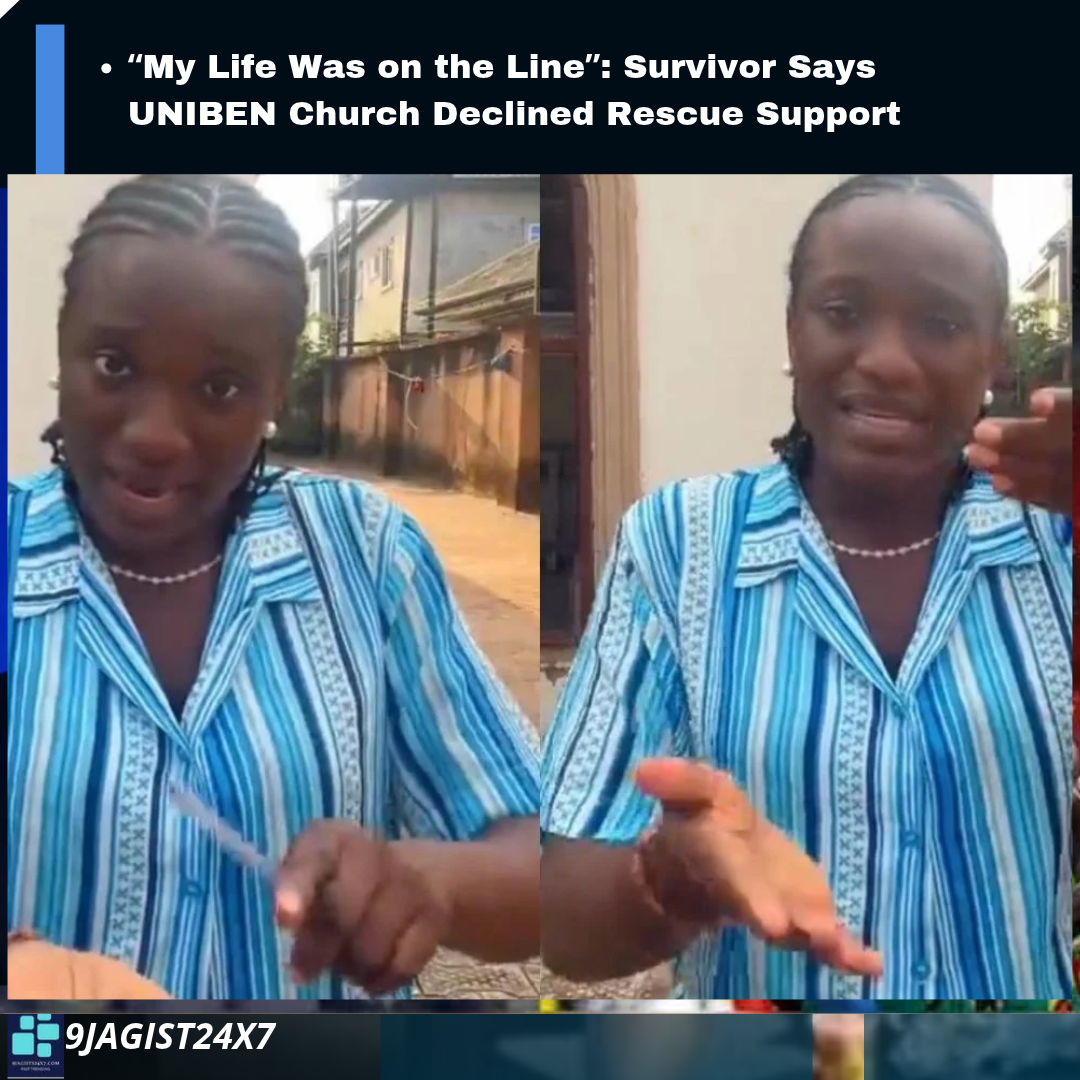
A Nigerian kidnapping survivor has publicly accused a Catholic priest at St Albert Catholic Church, University of Benin, of refusing to support efforts to raise funds for her rescue while she was in captivity.
Advertisements
The survivor, who said she worshipped at the church for seven years, alleged that her friends approached the priest for financial assistance but were turned away.
Advertisements
She made the allegation in a video shared on X on Monday, November 23, 2026.
What she alleges
According to the survivor, the priest declined to help and said he did not know the Catholic Church’s rules on such matters.
She also alleged that he refused to allow her friends to distribute flyers to church members who were willing to contribute.
“When I got kidnapped, my friends went to St Albert Catholic Church UNIBEN where I worship for seven years to raise funds and the priest said they’ll think about it, that he doesn’t know the Catholic rules about it. Mind you, my life was on the line,” she said.
“You don’t want to help, you don’t want to let others help, a supposed Christian, someone I look up to.”
The survivor further accused the priest of inconsistency, alleging that he spent three months announcing his father’s burial and soliciting donations during Sunday services.
She claimed the priest told the congregation that when a parish priest buries his father, “the full church” buries the father—and that Catholic rules did not apply in that case.
“But this same man wants to bury his father… three months before the burial, he kept announcing in church every Sunday, soliciting funds,” she alleged.
As of Tuesday, November 24, 2026, neither the priest nor the Catholic Archdiocese of Benin City had issued a public response to the allegation.
That silence matters. The survivor’s account is detailed and emotionally powerful, but it is one side of the story.
Without a response from the church, it is not possible to establish what the priest was told, what he said, or whether internal rules prevented him from acting as the survivor expected.
Why churches have financial rules
Catholic parishes and dioceses typically have internal procedures for handling money, including approvals for special collections and fundraising.
Those rules exist to prevent fraud and ensure accountability. But they can also create friction when a member faces an urgent, life-threatening crisis.
The survivor’s allegation raises a fair question: if a priest can solicit funds for a family burial, why would a kidnapping rescue be treated differently?
That question is about consistency, not just procedure.
Her account has resonated because kidnapping has become a painful reality for many Nigerian families.
Victims and their relatives often face impossible choices: raise large sums quickly, negotiate with criminals, or rely on security agencies whose response may be slow or uncertain.
Churches, mosques and community groups frequently become informal support networks in those moments. When that support is withheld or delayed, the sense of abandonment can be profound.
The survivor’s allegation should not be treated as proof that the priest acted callously. He has not had the chance to explain his side.
But the church should also not hide behind procedure without explaining how a member in danger can access help.
A credible response would address three questions: what the priest was told, what church rules actually required, and whether the parish has a clear process for emergency pastoral support.
Until then, the story remains an allegation—but one that speaks to a real tension between institutional order and human compassion.
Advertisements