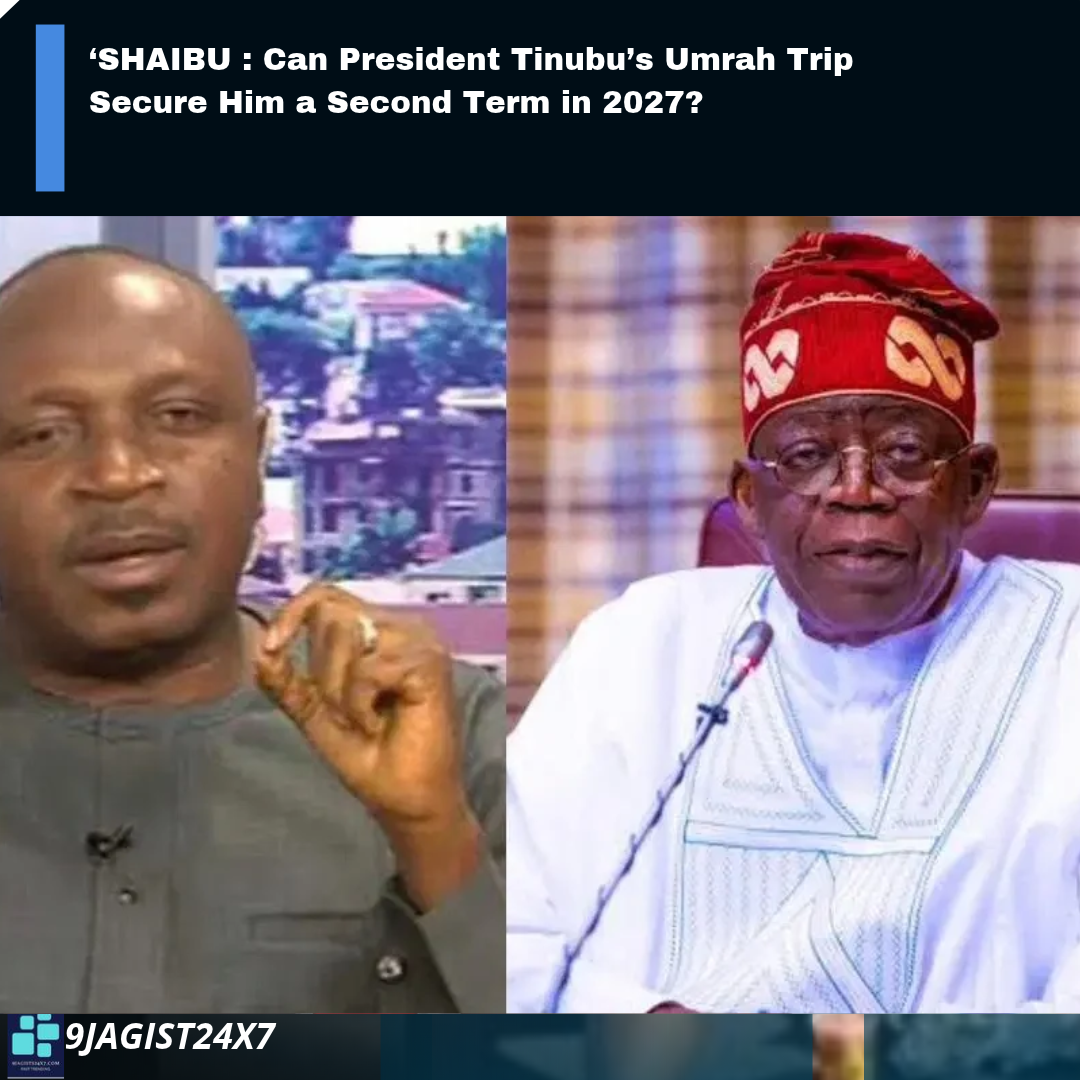
Phrank Shaibu, Director of Strategic Communication for the African Democratic Congress Presidential Campaign Council, says President Bola Tinubu’s Umrah trip to Saudi Arabia will not guarantee him a second term in 2027. Shaibu argued that spiritual visits cannot substitute for solutions to Nigeria’s economic hardship, and accused the Presidency of turning a personal religious act into a political event.
Advertisements
Shaibu, who serves as spokesperson for ADC presidential candidate Atiku Abubakar, made the remarks during an interview on Channels Television’s Politics Today. He said visiting the holy land should remain a private matter rather than a national spectacle, and criticised Tinubu’s supporters for politicising the pilgrimage.
Advertisements
Shaibu’s message was direct: prayer may be personally meaningful, but it will not determine the outcome of the 2027 election. He said Tinubu could not secure re-election through “spiritual claims,” insisting that voters will judge the president by the realities of daily life rather than by religious symboli
He criticised Tinubu for speaking into a microphone in Saudi Arabia while many Nigerians were struggling with economic hardship. According to Shaibu, the administration’s claims of economic improvement do not match the experience of citizens who continue to face high costs for food, goods, and services.
“Nigerians would remember the President’s prayers in Mecca alongside the high cost of food, goods and services,” Shaibu said, according to Vanguard.
That argument seeks to turn Tinubu’s religious trip into a political liability. Rather than treating the Umrah as a unifying act of faith, Shaibu framed it as a contrast between the president’s spiritual confidence and the material difficulties facing ordinary Nigerians.
Tinubu’s Message From Mecca
Tinubu travelled from Abuja to Makkah on October 29 to perform Umrah, saying he sought Allah’s guidance and blessings for Nigeria and its people. After completing the religious rites, he described the pilgrimage as a fulfilling spiritual experience and an opportunity to pray for the country.
The president said he asked God for wisdom and resilience to continue leading Nigerians, adding that he believed those prayers had been answered.
Tinubu also connected the trip to his political history. He recalled performing Umrah before the 2023 election, saying he had prayed for success and later returned to thank Allah after winning the presidency. “Prior to the 2023 election, I did the same thing,” he said. “I asked Allah to bless my Umrah then. He did, and I promised that I would come back to thank him.”
The president’s remarks presented the pilgrimage as both gratitude and renewed spiritual commitment. He said God owns power and can take it away if it is not used according to divine direction, while expressing belief that God had favoured him with the opportunity to lead Nigeria.
Why the Dispute Matters
The exchange reflects a broader political battle over how Nigerians will interpret Tinubu’s religious devotion ahead of 2027. For the President and his supporters, the Umrah is a personal act of worship and an opportunity to seek divine guidance for national leadership. For opposition figures such as Shaibu, it is an opportunity to question whether religious symbolism can distract from economic pain.
Shaibu’s criticism also fits into the ADC’s effort to position Atiku Abubakar as a credible alternative. He expressed confidence that Atiku would perform strongly across northern states, describing the former vice-president as “home and dry” in the region.
That claim is significant because northern support will be a major factor in the 2027 contest. Shaibu also sought to reinforce Atiku’s religious credentials by saying the former vice-president had sponsored Tinubu’s first trip to Mecca, suggesting that Atiku’s relationship with Islamic pilgrimage is longstanding rather than politically opportunistic.
The Economic Test
The sharpest part of Shaibu’s criticism concerns the economy. He dismissed official claims that conditions are improving, arguing that many Nigerians still face difficult living conditions.
That line of attack is likely to remain central to opposition messaging. Inflation, food prices, transport costs, and access to essential services affect voters directly, and opposition politicians will try to link those pressures to the Tinubu administration’s reform agenda.
Tinubu’s supporters, however, may argue that reforms require time and that religious faith should not be treated as a substitute for policy. The president’s own comments framed the pilgrimage as a search for wisdom and resilience in service, not as a claim that prayer alone would solve Nigeria’s problems.
Ultimately, the 2027 election will not be decided by whether Tinubu performed Umrah, but by whether voters believe his administration has improved their lives. Shaibu’s argument is that hardship will outweigh prayer; Tinubu’s message is that spiritual guidance strengthens leadership in a difficult period.
The controversy shows how religion, economy, and re-election politics are becoming intertwined ahead of 2027. For Tinubu, the challenge will be to convince Nigerians that his faith and reforms are producing tangible results. For the opposition, the task is to persuade voters that the president’s pilgrimage cannot obscure the cost of living, insecurity, and other pressures shaping everyday life.
Advertisements