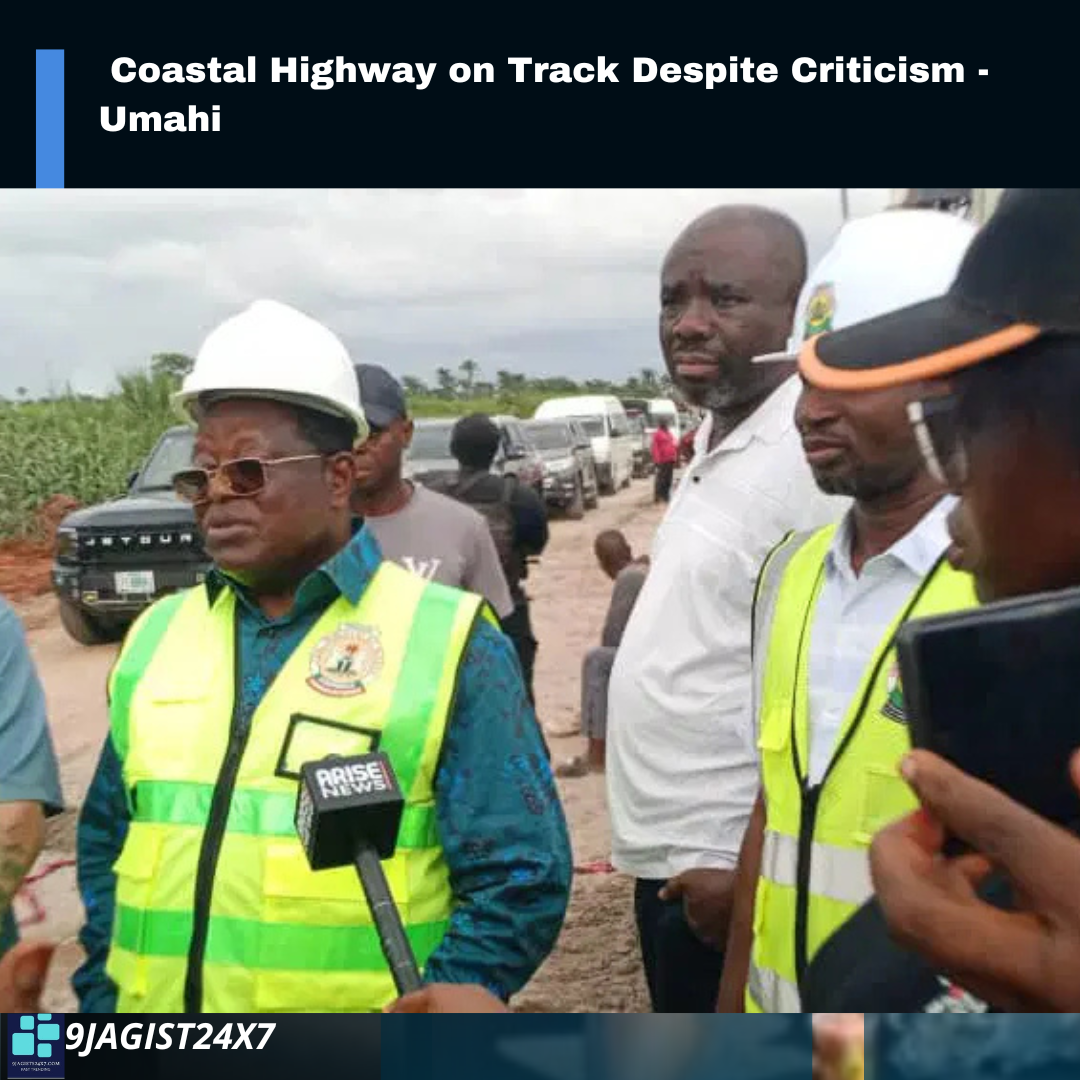
Minister of Works, Engr. David Umahi, has assured that President Bola Tinubu will deliver the 700-kilometre Lagos-Calabar Coastal Highway as scheduled, dismissing criticism of the project as driven by envy.
Advertisements
Umahi gave the assurance late Wednesday during an inspection of work on the Ondo State section of the highway, in Ilaje Local Government Area.
Advertisements
Project progress
The minister said Section 1 — a 7.47-kilometre stretch from Victoria Island to Elepe village — has been completed. Section 2, spanning about 50 kilometres from Lagos to the Ogun border, is roughly 70 per cent complete, while Sections 3A and 3B, covering about 67 kilometres, are around 30 per cent complete.
Section 4, extending roughly 82 kilometres through Ogun into Ondo State, is progressing, with the President committed to its completion, Umahi said. Section 5, about 180 kilometres long in Akwa Ibom State, is likely to be the longest stretch of the highway, with work currently ongoing.
He added that a further 100-kilometre section, beginning at the end of the Ondo axis, is at the design stage, after which only the sections through Rivers, Bayelsa and Delta States would remain.
Response to critics
Umahi addressed recent remarks by former Cross River State Governor Donald Duke, who had criticised the project in a television interview. While describing Duke as “brilliant” and commending his restraint from personal attacks, Umahi disputed Duke’s claims that the highway would not extend beyond Epe and that the project was not a priority, noting that the coastal highway had been conceived years earlier but stalled due to funding constraints.
“Those attacking the Coastal Highway are, in my view, motivated by envy because they never believed this President could deliver it,” Umahi said, describing Tinubu as capable of delivering the project.
He also responded to allegations by the Afenifere secretary that the ministry had diverted the highway’s route inland to benefit estate owners, calling the claim false.
Engineering rationale
According to Umahi, the highway was originally designed to run along the coastline, about two kilometres from the shoreline. However, soil testing revealed deep deposits of peat — in some areas extending 40 to 50 metres — along that route, making construction difficult. He said similar but shallower peat deposits, about 20 metres deep, were encountered and managed in the Lagos sections. Sand sourced from the sea was also found unsuitable for construction, he said.
Umahi commended the construction company handling the project for what he described as diligent work that was also benefiting host communities.
Advertisements